
A Gulf War That May Not End Quickly
CONFLICT
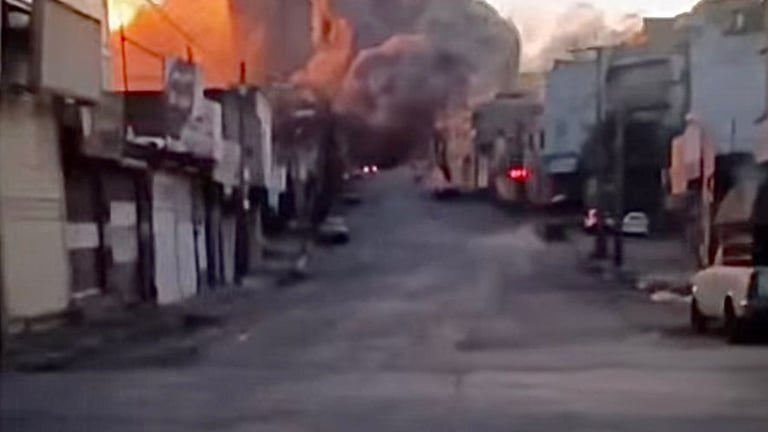
Imphal: The killing of Iran’s Supreme Leader, Ali Khamenei, in coordinated U.S.–Israeli strikes has pushed an already volatile region into open confrontation. What some in Washington may have viewed as a decisive blow now appears to have triggered a far more uncertain and dangerous phase. The assumption seemed simple: remove the head, and the body weakens. Yet Iran’s immediate and calibrated retaliation has confounded that logic. Far from collapsing, Tehran has signalled endurance. And endurance, in West Asian geopolitics, often outlasts firepower.
For those of us in Manipur, this may appear distant theatre. But wars in the Gulf rarely remain confined to maps and military briefings. They travel through oil prices, inflation charts, and the everyday cost of living.
At the heart of the crisis lies the Strait of Hormuz—a narrow maritime corridor through which nearly a fifth of the world’s oil supply passes. Even limited disruption there can send crude prices soaring past $100 a barrel. Markets react not only to blockades, but to risk. A single missile strike, a tanker seizure, or mined waters can tighten insurance premiums and choke shipping lanes.
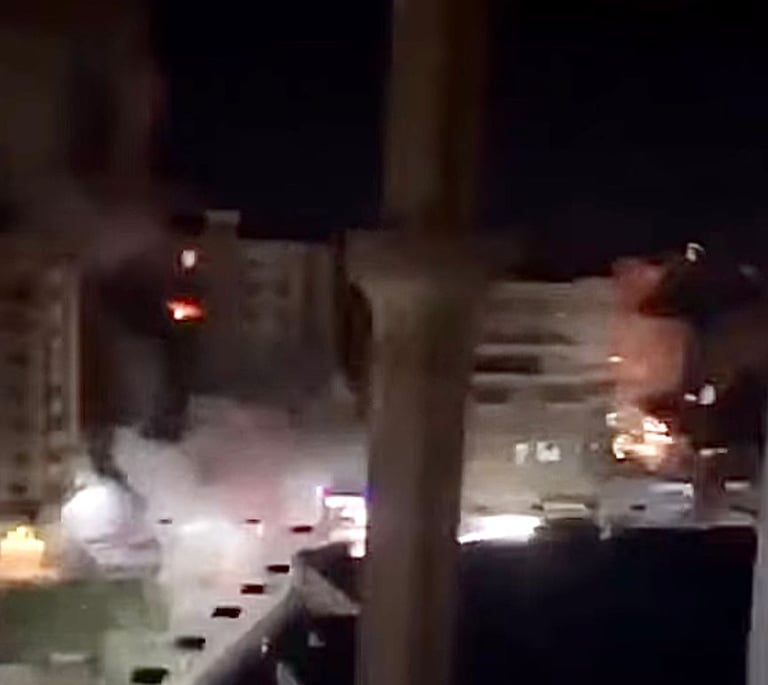
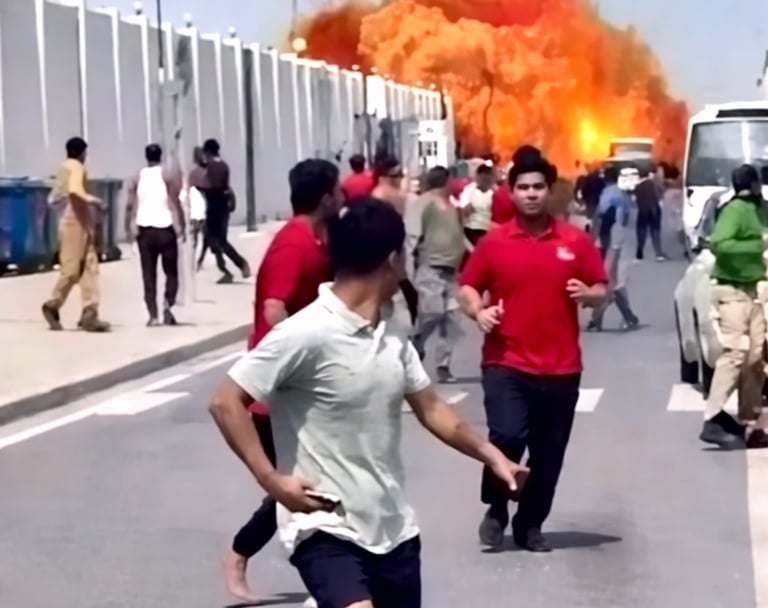
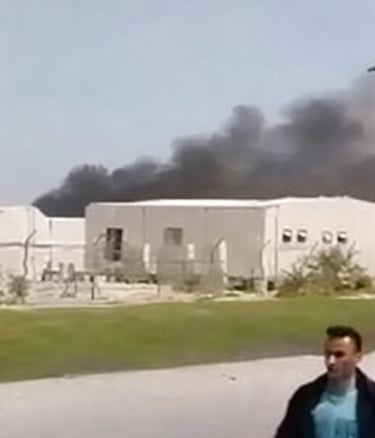
Image: Residential buildings near Doha
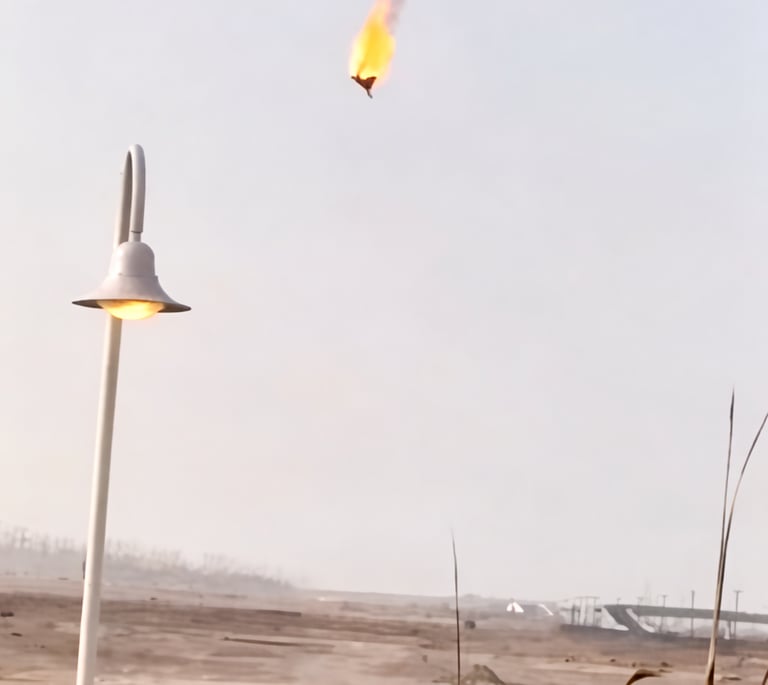
Image: A burning drone fell to the ground in Kuwait
If oil sustains above triple digits, the consequences are predictable. Inflation rises globally. Central banks delay interest rate cuts. Emerging economies, already strained, face renewed capital outflows. Supply chains—never fully restored since the pandemic—come under fresh pressure.
The larger question, however, is whether this conflict will be brief or prolonged. There are reasons to believe it may endure.
Iran’s political structure is not dependent on one individual alone. Power is diffused through the Revolutionary Guard, clerical institutions, and entrenched security networks. The removal of a supreme leader, rather than creating vacuum, can consolidate resolve. History in the region has shown that external strikes often harden ideological systems rather than dissolve them.
Moreover, Iran’s military doctrine is asymmetrical. It does not require air superiority to sustain pressure. Its missile arsenal, drone capabilities, cyber reach, and regional proxies allow it to calibrate retaliation over months or years. U.S. bases across the Gulf remain within range. Escalation need not be dramatic; it can be incremental and persistent.
This is where the geopolitical shadow lengthens. Both China and Russia have condemned the strikes. Public diplomacy is one layer. Quiet cooperation is another. Intelligence sharing, satellite data, electronic countermeasures, and technical inputs—none of these require formal alliances to alter the balance.
For China, the stakes are economic. Discounted Iranian crude has long fed its industrial machine. Any American attempt to reshape Tehran’s leadership or tighten oversight over Hormuz directly affects Beijing’s energy security. For Russia, higher oil prices strengthen its own fiscal position. A United States absorbed in Gulf tensions also eases pressure elsewhere.
What, then, is Washington’s ultimate objective? Officially, the strikes aim to dismantle missile and nuclear threats. Yet critics point to a broader strategic design. With Venezuelan oil constrained and Iran destabilised, American leverage over two major sanctioned suppliers increases. Control over energy chokepoints need not be absolute; influence alone can shape global price dynamics.

Image: Luxury Hotels in Dubai hit
If a weakened or reoriented Iran emerges, oversight of Hormuz becomes not just a regional concern but a global instrument. In an era defined by competition with China, energy leverage carries strategic weight.
For India, the fallout would be immediate. The country imports the majority of its crude. Every sustained $10 rise in oil prices chips away at growth, weakens the rupee, and fuels inflation. Fertilizer costs climb. Transport expenses rise. Aviation and manufacturing margins narrow.
In states like Manipur, where goods travel long distances before reaching local markets, higher fuel costs are not abstract macroeconomic figures. They are visible in LPG cylinder prices, in freight charges, and in the strain on rural households. The ripple effects travel swiftly from global chokepoints to village kitchens.
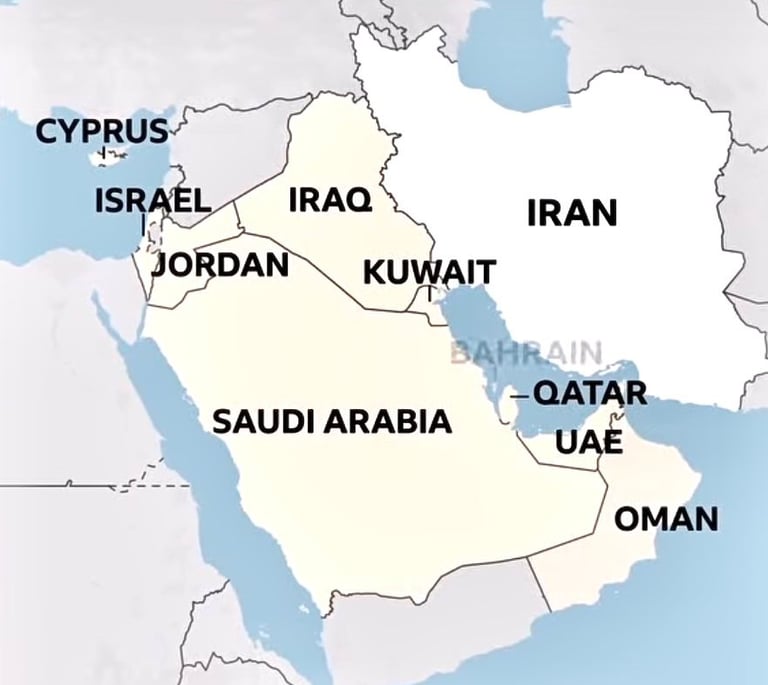
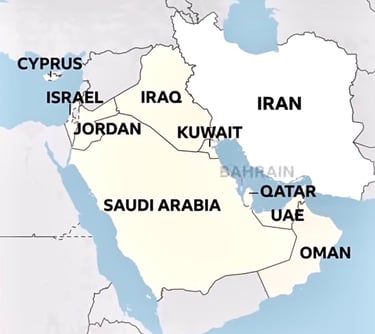
Image: The Middle East has witnessed an escalation of tensions after USA-Israel struck Iran and killed Iran’s supreme leader Ayatollah Ali Khamenei causing retaliatory missile attacks all across the region having milit bases.
New Delhi now faces a delicate diplomatic balancing act. Strategic partnership with Washington must coexist with pragmatic engagement in West Asia. Maintaining autonomy in a polarised environment will require careful navigation.
The United Arab Emirates, too, stands at a crossroads. While elevated oil prices may temporarily boost revenues, sustained instability threatens aviation hubs, maritime trade, and investor confidence—the very pillars of its diversification model. Missile alerts are hardly conducive to financial optimism. Many have started fleeing from the emirates for safety.
Ultimately, the danger lies not in a swift war but in a lingering one. Decapitation strategies have rarely delivered tidy outcomes in the Middle East. They often replace certainty with drawn-out contestation.
If Iran sustains asymmetric retaliation, if China and Russia deepen quiet support, and if Washington doubles down rather than recalibrates, the region may slide into a prolonged standoff. Energy markets will remain volatile. Alliances will shift. Global inflation pressures will persist.
New Delhi now faces a delicate diplomatic balancing act. Strategic partnership with Washington must coexist with pragmatic engagement in West Asia. Maintaining autonomy in a polarised environment will require careful navigation. The United Arab Emirates, too, stands at a crossroads. While elevated oil prices may temporarily boost revenues, sustained instability threatens aviation hubs, maritime trade, and investor confidence—the very pillars of its diversification model. Missile alerts are hardly conducive to financial optimism. Many have started fleeing from the emirates for safety.
Ultimately, the danger lies not in a swift war but in a lingering one. Decapitation strategies have rarely delivered tidy outcomes in the Middle East. They often replace certainty with drawn-out contestation. If Iran sustains asymmetric retaliation, if China and Russia deepen quiet support, and if Washington doubles down rather than recalibrates, the region may slide into a prolonged standoff. Energy markets will remain volatile. Alliances will shift. Global inflation pressures will persist.
From the hills of Manipur, one learns that conflict seldom unfolds according to the scripts drafted in distant capitals. It lingers. It reshapes societies slowly. And it leaves ordinary citizens paying for decisions made far away. The Gulf may seem distant from Imphal. But when oil burns there, its heat travels.
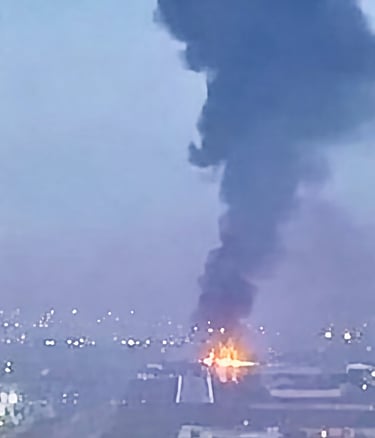
Image: An international airport hit at Erbil
CONTACT
Waari Singbul Office
Konung Mamang
Imphal – 795001
© Copyright 2023 Waarisingbul.com. All Rights Reserved