
Bengaluru witnesses India’s first intra-city drone logistics trials, cutting delivery time to minutes
SCIENCE & TECHNOLOGY
Chennai: In a development that signals the quiet reshaping of India’s logistics backbone, FedEx, in collaboration with the Indian Institute of Technology Madras, has completed the country’s first intra-city drone delivery trials in Bengaluru. The trials, conducted under the FedEx SMART Centre at IIT Madras, tested high-speed drone operations across complex urban airspace, linking Electronic City Phase II with a site near the Kempegowda International Airport zone. What once took over an hour by road—a 53-kilometre stretch—was reduced to nearly 21 minutes through an aerial route spanning approximately 39 to 42 kilometres.
In the language of progress, this is no small shift. It is the difference between delay and immediacy, between clogged roads and open skies.
According to Nitin Navneet Tatiwala, Vice President of Marketing, Customer Experience, and Air Network (MEISA), the milestone reflects a broader push toward future-ready logistics. He noted that the initiative forms part of a wider research agenda encompassing air cargo optimisation, electric vehicle integration, and advanced demand forecasting—each thread woven into the larger fabric of resilient and sustainable supply chains.
The trials also navigated regulated air corridors, including Airport Yellow and Red Zones, with necessary clearances from the Directorate General of Civil Aviation, underscoring both compliance and operational readiness in India’s evolving drone ecosystem.
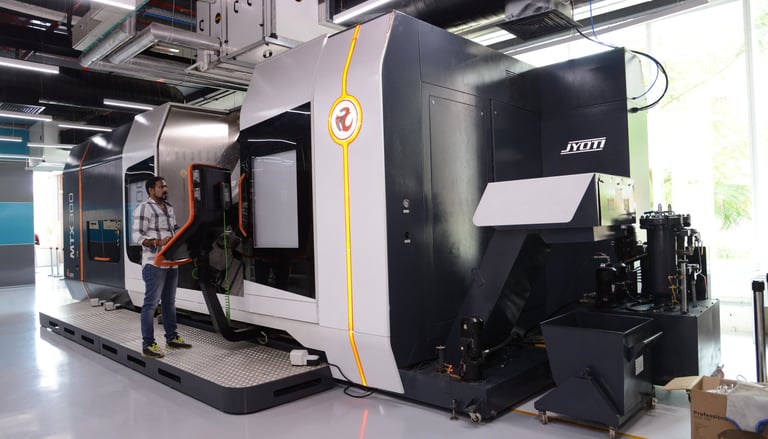
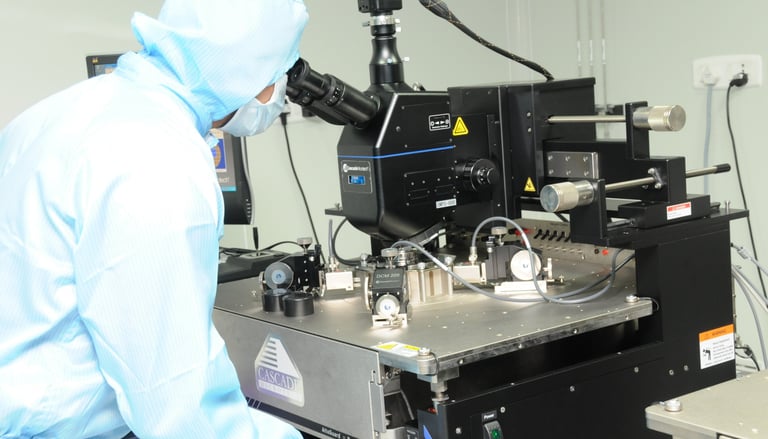
Image: Research at IIT Madras
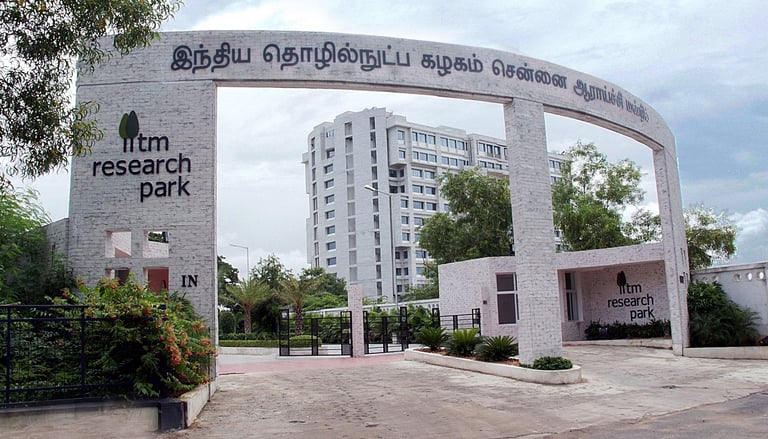
Image: IIT Madras Research Park
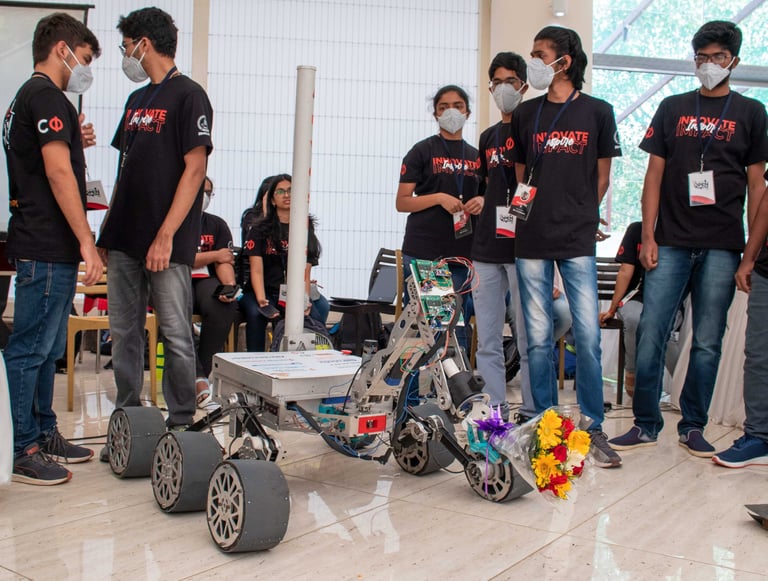
Image: CFI Team Team Anveshak’s Mars Rover demonstrating its capabilities during CFI Open House 2022 on 13th March 2022
Image: A view of the New Academic Complex at IIT Madras, Chennai, Tamil Nadu
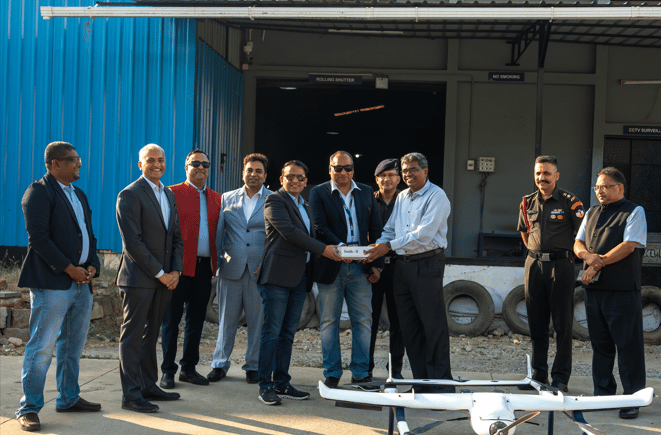
Image:IIT Madras & FedEx representatives with the drone during India’s first intra–city drone delivery flight trials in Bengaluru
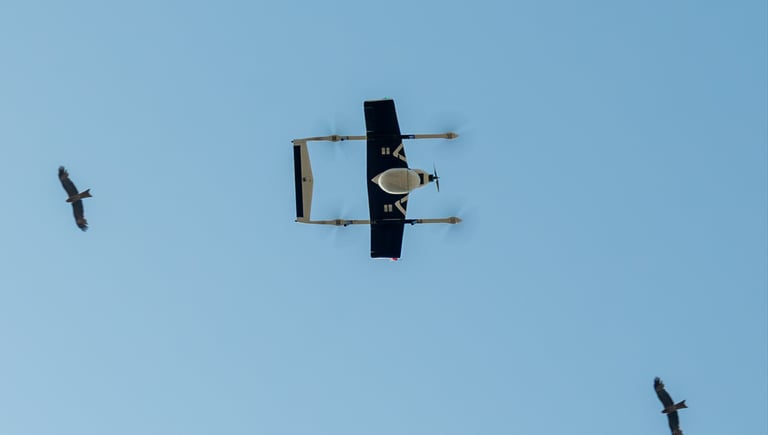
Image: FedEx & IIT Madras have successfully completed India’s First Urban Drone Logistics trials
At the heart of the experiment lies a deeper technological ambition. Satyanarayanan R Chakravarthy, core faculty at the SMART Centre, described the trials as a decisive move from theory to application, where aerial robotics is no longer confined to laboratories but begins to breathe in real-world logistics networks. His colleague, Arshinder Kaur, added that such high-speed drone deliveries demonstrate the centre’s commitment to advancing cutting-edge supply chain technologies in India.
Operations were carried out at an altitude of 120 metres, adhering to regulatory guidelines. The drones were equipped with layered safety mechanisms, including autonomous flight termination systems, return-to-home capabilities, and anti-collision strobe lighting—features that reflect a cautious yet determined march toward automation.
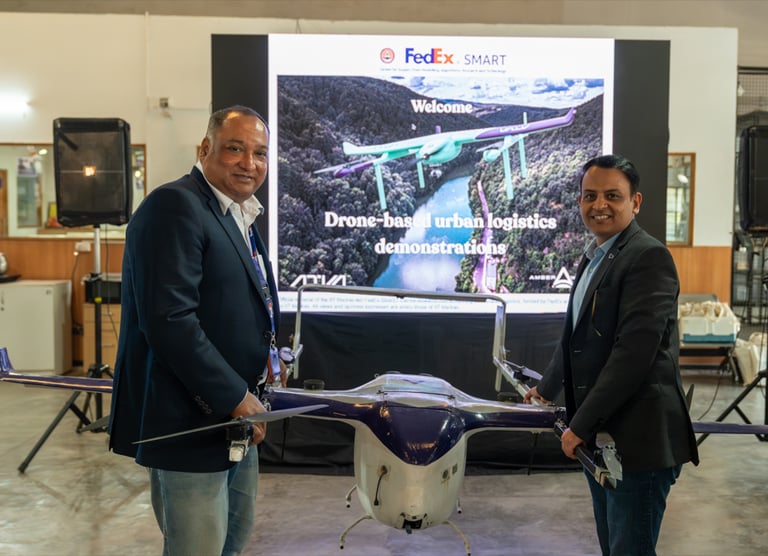
The implementation partner for the trials was Amber Wings, a deep-tech startup incubated at IIT Madras and founded by Prof. Chakravarthy. Its role signals the growing interplay between academia and entrepreneurship in shaping India’s technological future.
Beyond the spectacle of machines in flight lies a more enduring question: how cities will move, breathe, and sustain themselves in the decades ahead. If these trials are any indication, the answer may not lie on the roads alone, but in the unseen corridors above—where time is trimmed, distances shrink, and the old burdens of congestion begin, slowly, to lift.
CONTACT
Waari Singbul Office
Konung Mamang
Imphal – 795001
© Copyright 2023 Waarisingbul.com. All Rights Reserved