Buffer Zones or Borderlines? How a Security Measure Is Recasting Manipur’s Ethnic Conflict
CONFLICT
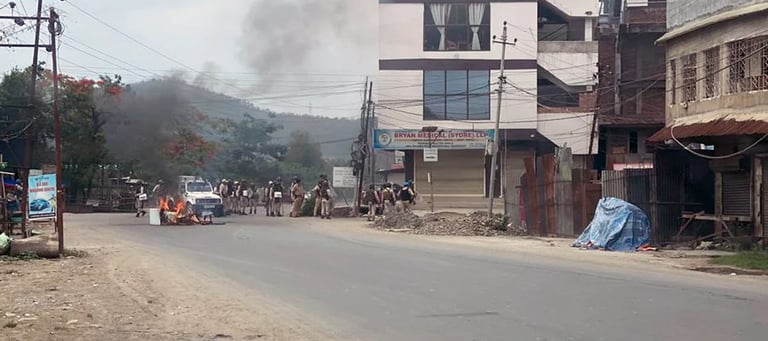
Imphal: In violence-scarred Manipur, the phrase “buffer zone” has come to mean far more than a temporary security arrangement. What was introduced as an emergency measure to separate warring communities has steadily acquired political weight—one that now threatens to harden ethnic divisions and reframe the conflict in territorial terms.
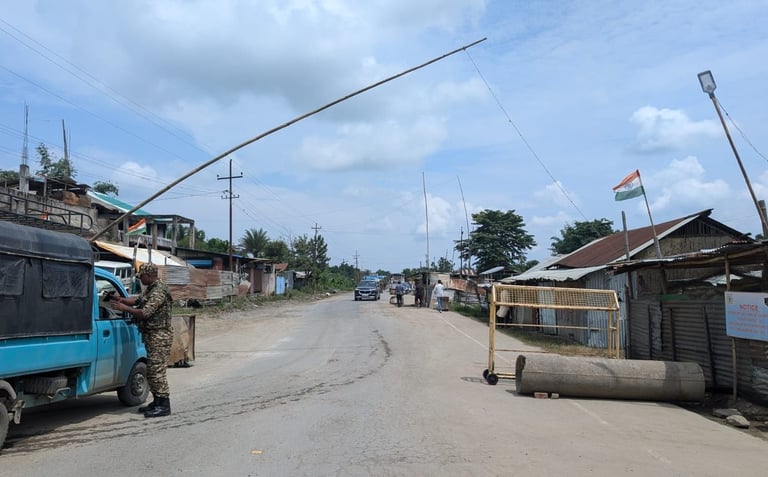
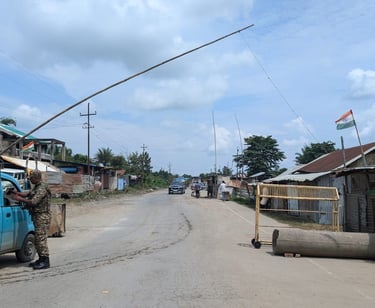
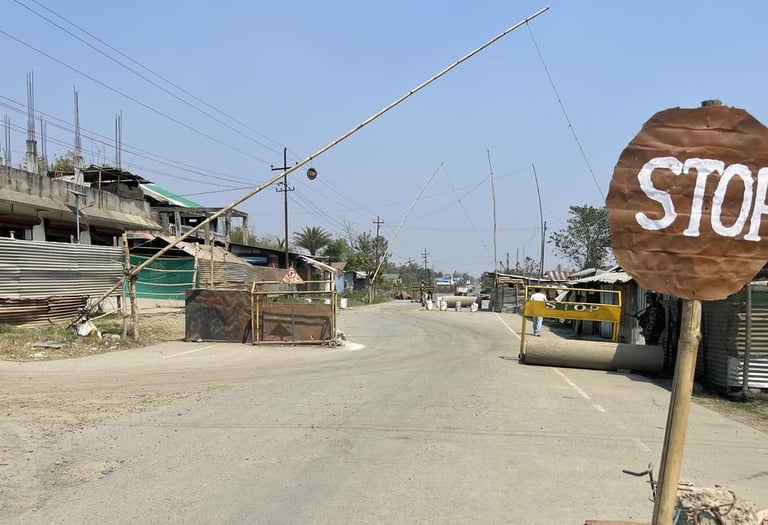
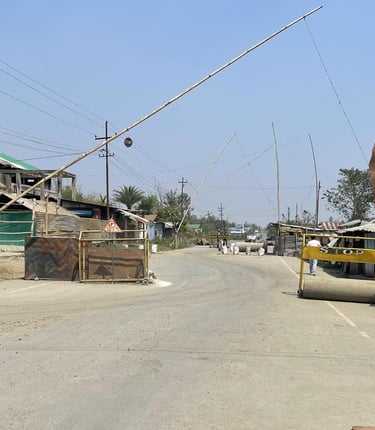
Since the ethnic violence of May 3, 2023, security forces have maintained heavily guarded stretches across Manipur’s foothills, ostensibly to prevent clashes between Meitei and Kuki-Chin-Zo (KCZ) populations. Officially, the state insists there is no constitutionally declared buffer zone—only “sensitive” or “hotspot” areas requiring deployment. Yet on the ground, lived reality tells a different story.
For the KCZ leadership and civil bodies, these demarcated spaces have increasingly become non-negotiable lines—zones to be “maintained” at all costs. Any perceived transgression, particularly by Meiteis, is met with threats of retaliation. Over time, what began as a peacekeeping arrangement has started resembling a proto-border, aligning neatly with long-standing KCZ demands for a separate Union Territory or “Kukiland” carved out of Manipur.
This trajectory has alarmed Meitei civil society, which views the buffer zone as an extra-constitutional device that fragments a state with over 2,000 years of recorded political history, dating back to its pre-merger with India in 1949. For the Meiteis, Manipur is not merely an administrative unit, but a civilizational space where multiple ethnicities have coexisted, often contentiously, yet within a shared political framework. To divide it along ethnic lines, they argue, would set off a dangerous domino effect across India, emboldening similar demands elsewhere.
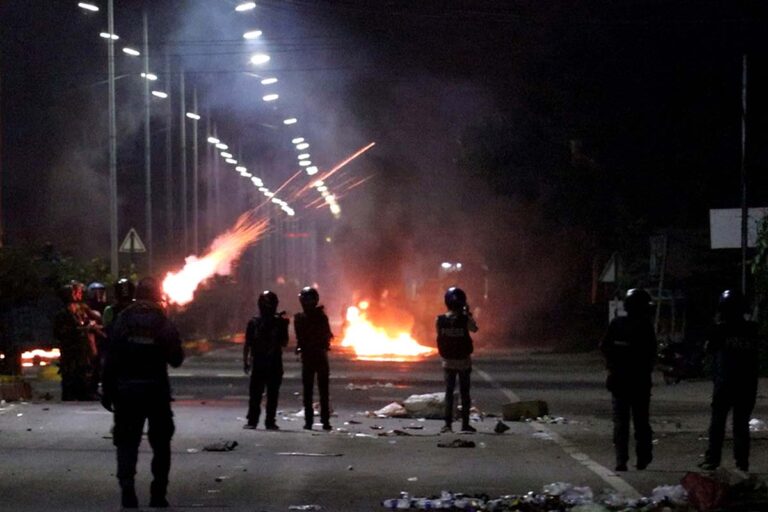
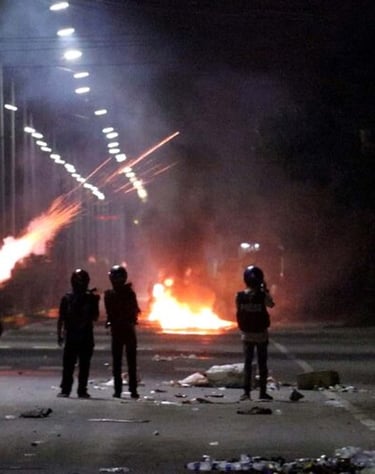
The contradiction between official statements and field realities came into sharp focus recently when Manipur’s Inner Lok Sabha MP, Dr. Angomcha Bimol Akoijam, was stopped by security personnel from entering the Saiton area during a field visit after a Meitei village was attacked. The reason: he is a Meitei. The MP publicly termed the incident “extra-constitutional,” questioning under whose authority elected representatives could be barred from parts of their own constituency. Days later, the Governor of Manipur, speaking to civil society organisations, led by COCOMI, asserted unequivocally that “there is no buffer zone.” The statement, intended to reassure, instead exposed a governance paradox: if no buffer zone exists, why do security forces enforce ethnic-based movement restrictions on the ground?
The deeper anxiety lies in how buffer zones, once normalized, reshape political imagination. Strategic history offers a cautionary parallel. In Israel–Palestine, buffer zones—initially justified as temporary security measures—later became instruments that facilitated demographic change, settlement expansion, and the hardening of territorial claims after the creation of the State of Israel. Over time, these security arrangements altered facts on the ground, entrenching divisions and complicating any return to coexistence. In Manipur, Meitei observers fear a similar pattern: Kuki-Chin-Zo militants operating under Suspension of Operations (SoO) agreements are alleged to exploit these demarcated zones, while symbols of control and unauthorized constructions quietly reshape territorial realities.
What is at stake is not merely access to land but the idea of Manipur itself—as a multi-ethnic state rather than a patchwork of homelands. The buffer zone, if allowed to persist without political clarity and constitutional grounding, risks becoming the scaffolding for permanent division.
Security can pause violence, but it cannot substitute politics. Buffer zones may separate bodies, but they also separate histories, memories, and futures. In Manipur, the longer these zones endure, the more they cease to be neutral spaces of peacekeeping—and begin to look like borders in the making.
CONTACT
Waari Singbul Office
Konung Mamang
Imphal – 795001
© Copyright 2023 Waarisingbul.com. All Rights Reserved