EREIMANG RISING: WHEN THE EARTH LEARNS TO ROAR
ART & CULTURE

Imphal: Some sounds are not born in studios. They rise from soil, smoke, memory, and ritual. Ereimang belongs to that lineage. On 18 January, at BLR Hubba in Bengaluru, a tremor from Manipur will cross its borders for the first time. Ereimang, a Manipuri contemporary folk–inspired experimental band, will step onto a stage far from home, carrying with them not just instruments, but an entire cosmology. Presented under the quiet yet confident line “From Manipur with love – Ereimang,” this first performance outside the state marks the beginning of a longer journey—one that seems destined to unsettle and enchant the world music landscape.
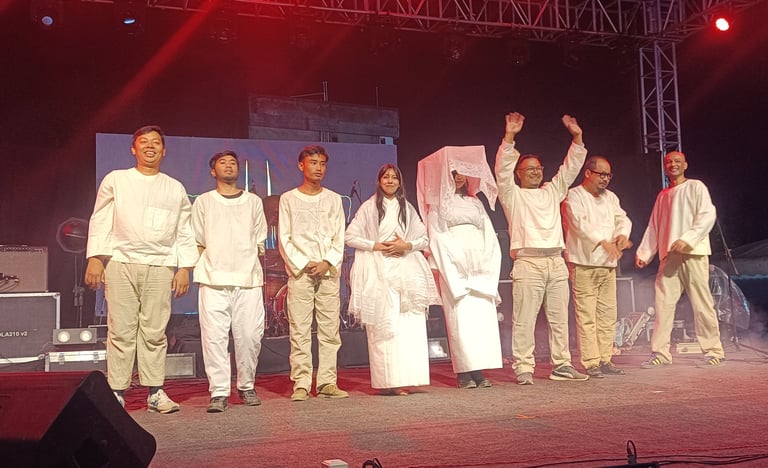
Image: Ereimang bows to their listeners
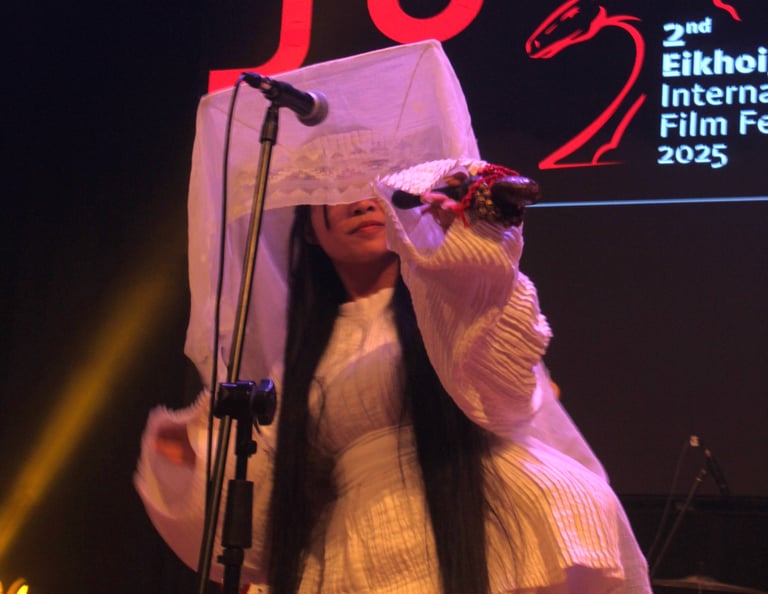
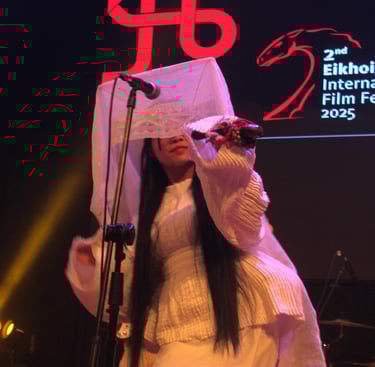
Image: Ereimang's female vocalist enchanting the audience of the 2nd EIIFF 2025


Image:Ereimang's Stage presence

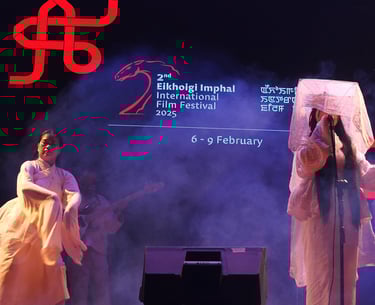
Image: Ereimang's female vocalist and the Performer setting the stage of fire (2nd EIIFF 2025)
Ereimang has already earned a reputation for refusing the safety of labels. Folk, metal, experimental, ritual—these words circle their sound but never quite land. What they offer instead is collision: the ancient breath of Manipuri performative traditions crashing headlong into heavy, distorted atmospheres more often associated with rock and metal. At the heart of this collision stands the Pena, the indigenous string instrument whose lament carries centuries of memory. In Ereimang’s hands, the Pena does not merely sing; it wrestles with distortion, cuts through walls of sound, and emerges raw, unsoftened, unafraid.
Their music draws deeply from Manipuri stories, ceremonies, and cultural narratives—not as museum artefacts, but as living forces. What unfolds is an experience of chaos and renewal, a ritual spiral where old spirits learn new tongues. Visuals, movement, and sound merge into a single elemental force, reminding us that music once belonged to the body, the earth, and the unseen.
Ereimang’s stage becomes a ritual space rather than a performance arena. At its centre stands the female vocalist, clad in ceremonial white, crowned with a distinctive headgear, her face veiled by an almost translucent cloth. From behind this gauze, folklore emerges—not gently, but forged into the weight and force of heavy metal, ancient words riding modern distortion.
Beside her moves another female presence, dressed in white, almost like a Meitei Maibi, the shaman. Her face too is veiled, her body in constant motion, dancing as if summoned by unseen forces, translating the music’s dense, primal message into flesh and breath. It is not choreography but invocation. Threaded through this sonic storm is the Pena, its voice cutting and caressing at once—binding the heaviness of metal to the deep memory of the land. This fusion of sound and vision is Ereimang’s signature: where tradition and extremity do not collide, but recognise each other as kin.
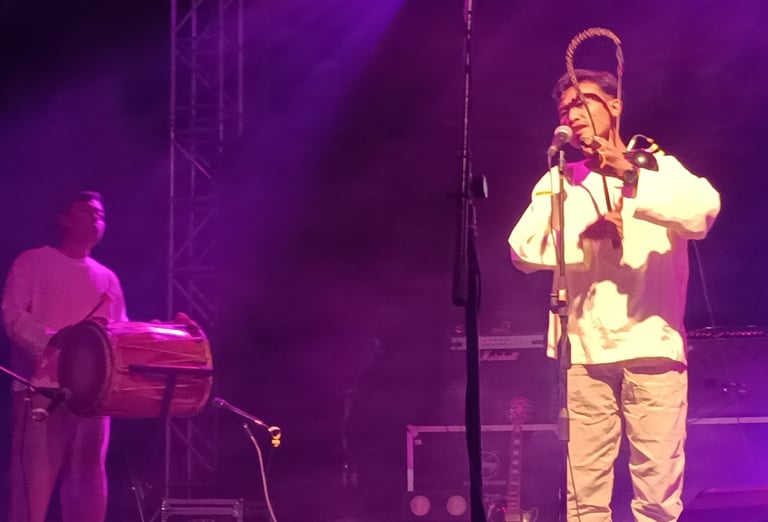
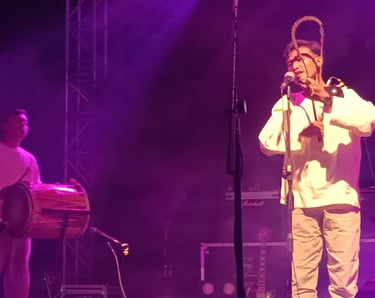
Image: Thoichanba the Pena player
The significance of their Bengaluru appearance is sharpened by context. Ereimang will perform earlier in the evening on the same stage that legendary American guitarist Marty Friedman headlines later that night. Friedman is the former lead guitarist of Megadeth, the thrash metal band. It is a rare alignment—one that quietly places a young band from Manipur in conversation with global metal history. The contrast is striking, yet fitting: virtuosity meeting ritual, legacy meeting emergence. Ereimang’s rise feels timely because it is honest. There is no attempt to sanitize tradition for global palates, no apology for heaviness, no fear of being misunderstood. The band understands something fundamental: the world does not need another imitation—it needs origins that speak with conviction. Their sound does not ask for permission. It demands listening.
Though Ereimang formed as early as 2015, they chose silence over premature exposure. The band surfaced publicly only in 2025—and when they did, it was without noise or apology. Their first release, Kwakta Lamjel (The Race at Kwakta), arrived stripped of excess yet heavy with intent. Built around the Pena and carried by grounded male vocals, the song adapts a Meitei folk ballad about an undefeated figure undone by his own injustice. The message is blunt and old as memory: power without ethics doesn’t last. Heirangkhoi followed—and the response was immediate. The track crossed 400,000 views and likes on YouTube, not through algorithms but instinct. Drawn from a cherished folk song reflecting on life’s cyclical nature—loss, remembrance, fate—it reimagines a quiet dialogue between a fallen wildflower and the wind through folk-noise rock and metal. It wasn’t revision. It was resurrection.
Then came Ching (The Hill), where the band dug even deeper. Hills emerge not as landscape, but as witnesses—silent keepers of history, conflict, and continuity. The female voice here sounds less like singing and more like prophecy, channelled through a shamanic register that blurs time.
Ereimang’s first public performance came at the 2nd Eikhoigi Imphal International Film Festival, held from 6 to 9 February 2025. The moment was charged. It was among the first major cultural gatherings in Manipur after the unprecedented unrest that gripped the state from 3 May 2023 onwards. In that fragile space, Ereimang struck a chord—not as entertainers, but as vessels. The audience did not merely watch; they bore witness.
As Ereimang steps onto the Bengaluru stage, they carry with them more than instruments. They carry the pulse of Manipur’s hills and valleys, the echo of ceremonies once performed under open skies, the tension between preservation and reinvention. This first performance outside the state is not an escape; it is an offering.
“BLR Hubba is a massive cultural space,” says percussionist and manager Heisnam Shantanu. “Stepping into it brings excitement, nervous energy, and responsibility.”Founder L. Kamal Singh explains the long wait before going public with clarity. “Everything was ready ten years ago. But we knew we would be misunderstood. Some of us were too young. The timing wasn’t right. So, we waited.”The world music scene often speaks of a hunger for the “authentic.” Ereimang answers with something stronger—the alive. And the living is never neat. It crackles, it roars, it unsettles. From Manipur, with love—yes—but also with fire: a sound not performed but summoned, rising like a chant, seizing the air, and swaying the body of the shaman into motion.
Ereimang comprises L. Kamal Singh and Gajendra Laipubam on guitars, Kamlesh Khundrakpam on bass, Thoichanba on Pena and male vocals, Heisnam Shantanu on percussion, Nongshaba Okram on drums, Minerva Laipubam on female vocals, and Vandana Wahengbam as performer.
CONTACT
Waari Singbul Office
Konung Mamang
Imphal – 795001
© Copyright 2023 Waarisingbul.com. All Rights Reserved