Governor’s Address as Balance Sheet: One Year of President’s Rule in Manipur—Order Restored, Wounds Unhealed
ANALYTICAL
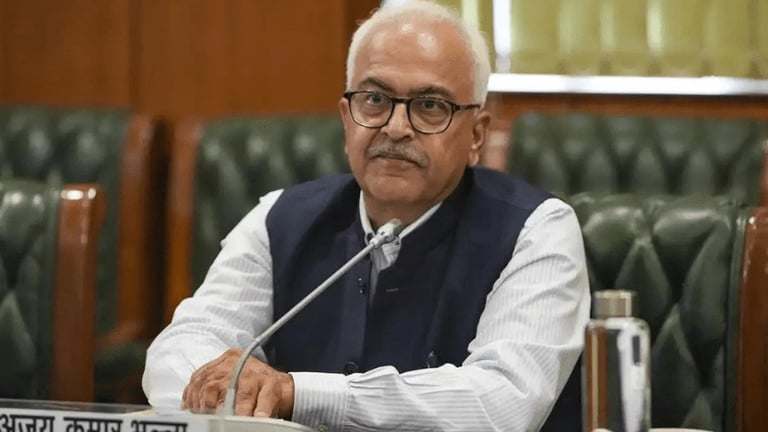
Imphal : The Governor’s Address to the 7th Session of the 12th Manipur Legislative Assembly was more than a constitutional formality marking the end of President’s Rule; it read like a carefully worded balance sheet of a state administered under extraordinary conditions for nearly a year. With elected government restored and the Assembly reconvened, Governor Ajay Kumar Balla’s speech offered an implicit assessment of what President’s Rule achieved—and where it fell short—in a Manipur battered by ethnic violence, institutional paralysis, and social rupture.
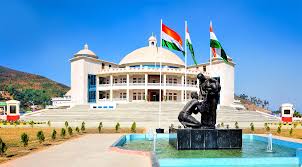
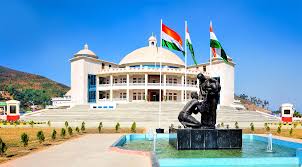
President’s Rule was imposed at a time when the authority of the state had visibly retreated from large parts of Manipur. Law and order had collapsed in many districts, administrative chains were fractured, and violence had hardened into routine. Against this backdrop, the Governor’s primary mandate was not development in the conventional sense, but the reassertion of the state itself.
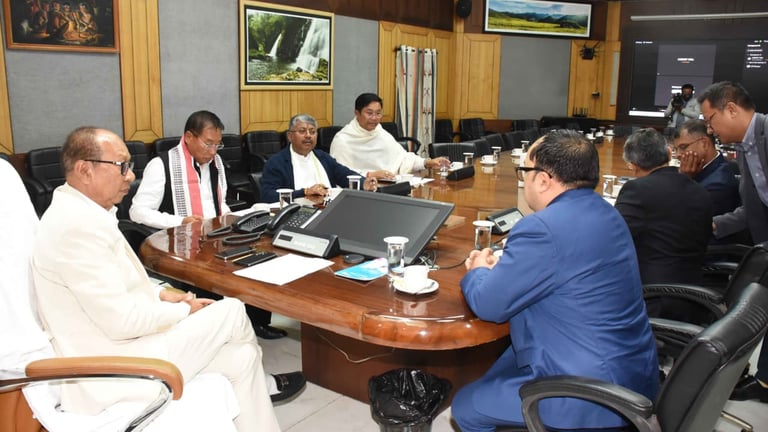
Restoration of Rule of Law: Partial but Significant
The Governor’s Address foregrounded the restoration of law and order as the central achievement of the period. By most objective measures, large-scale violence was contained. Curfews were rationalised, armed confrontations reduced in frequency, and security deployment became more coordinated under central supervision. The reopening of highways, albeit intermittently, and the relative stabilisation of Imphal Valley signalled that the writ of the state had been re-established in core administrative zones.
Yet the Address stopped short of claiming full normalcy—and rightly so. While mass violence declined, sporadic incidents, deep mistrust, and the continued presence of armed groups indicated that peace remained fragile. President’s Rule succeeded in halting escalation; it did not—and perhaps could not—engineer reconciliation.
Normalcy: Administrative Order Without Social Healing
Governor Balla’s speech repeatedly invoked “normalcy,” but framed it in institutional rather than emotional terms. Schools reopened in phases, government offices resumed operations, examinations were conducted, and basic services functioned with greater regularity. From a governance standpoint, these were not minor achievements.
However, normalcy remained uneven and contested. Entire communities continued to live segregated lives, and many districts operated under an invisible but firm psychological curfew. The Address acknowledged this indirectly, urging restraint and collective responsibility—an admission that order had been restored from above, not rebuilt from below.
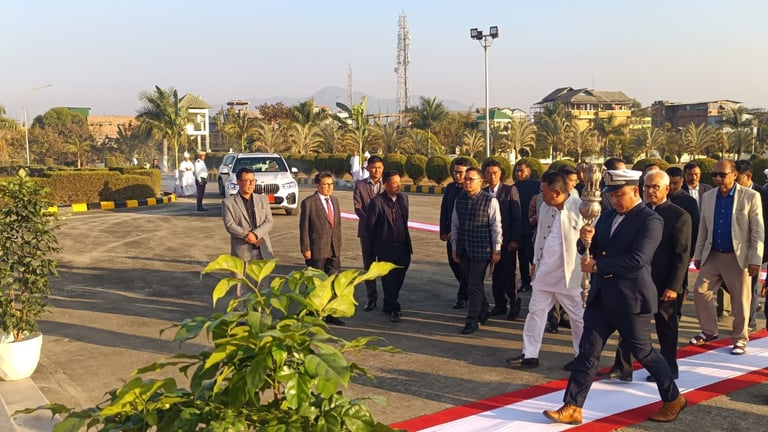

Halting Violence: A Ceiling, Not a Cure
One of the more defensible claims of the President’s Rule period is that it placed a ceiling on violence. The Governor’s Address credited coordinated security action, intelligence-led policing, and administrative firmness for preventing a relapse into full-scale conflict.
But the speech avoided triumphalism. It did not declare victory over violence; instead, it framed peace as a condition to be preserved through vigilance. This caution reflects the limits of Governor-led administration: violence can be contained through force and command, but its causes lie beyond the reach of ordinance and deployment.
Displaced Persons: The Sharpest Test
The rehabilitation and resettlement of internally displaced persons (IDPs) remains the most morally weighty—and politically sensitive—yardstick of President’s Rule. The Governor’s Address acknowledged relief and rehabilitation as ongoing priorities, noting efforts to provide shelter, rations, healthcare, and education to displaced populations.
Here, the record is mixed. Relief camps functioned with improved coordination, leakages were reduced, and central assistance flowed more predictably. Yet large-scale resettlement remained elusive. Many displaced families continued to live in limbo, unable to return home and uncertain of the future. President’s Rule managed suffering; it did not resolve displacement. The Address, by avoiding deadlines or declarations, tacitly conceded this limitation.
Development Works: Maintenance, Not Momentum
Development during President’s Rule was necessarily conservative. The Governor’s Address highlighted infrastructure repair, road maintenance, and restoration of public utilities rather than new flagship projects. This was governance in survival mode—keeping the system from rusting rather than pushing it forward.
Financial discipline was emphasised, especially in the context of a truncated financial year. The focus on fiscal prudence reflected an administration aware that legitimacy under President’s Rule comes from restraint, not ambition. Critics may see stagnation; administrators will recognise stability.
Governance Without Politics: Strength and Constraint
Perhaps the most understated theme of the Address was the advantage—and burden—of governance without electoral pressure. Decisions were taken without fear of backlash, but also without the warmth of popular mandate. The Governor’s appeal to legislators to rise above partisanship was, in effect, a quiet defence of the technocratic calm imposed during President’s Rule.
Yet this very absence of politics also limited the scope of healing. Reconciliation is ultimately a political act. President’s Rule can hold the line, but it cannot lead society across it.
A Transitional Verdict
Read closely, the Governor’s Address did not seek applause. It sought closure. It presented President’s Rule as a necessary pause—an intervention that stopped the bleeding, stabilised the patient, and handed the case back to elected representatives.
The achievements are real: violence capped, administration restored, constitutional order revived. The failures are equally real: displacement unresolved, trust fractured, peace incomplete.
In that sense, the Address was honest. It did not claim that President’s Rule saved Manipur. It claimed, more modestly and more truthfully, that it kept Manipur governable.
Now, the baton has passed. The test of healing, rebuilding, and reconciliation belongs once again to politics. The Governor has closed the ledger. History will judge whether the next chapter honours the fragile order he leaves behind.
CONTACT
Waari Singbul Office
Konung Mamang
Imphal – 795001
© Copyright 2023 Waarisingbul.com. All Rights Reserved