“I Will Not Let Your Tears Go in Vain”: At a Relief Camp in Imphal, a State Confronts Its Conscience
CONFLICT
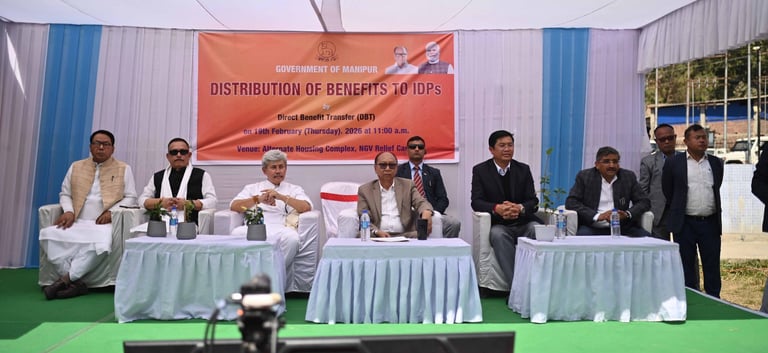
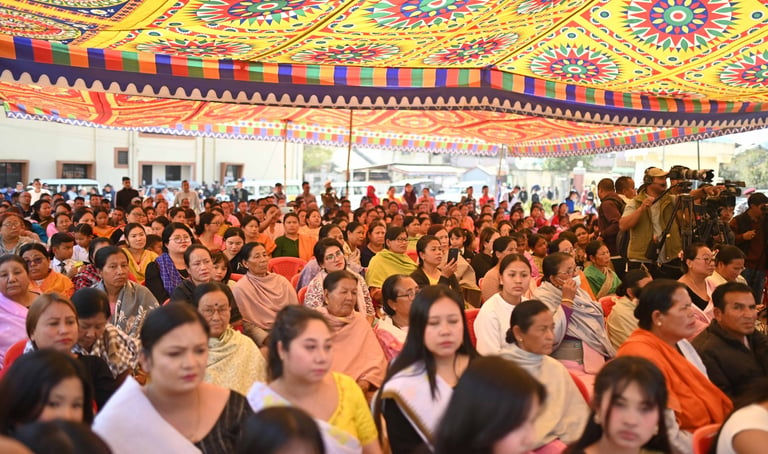
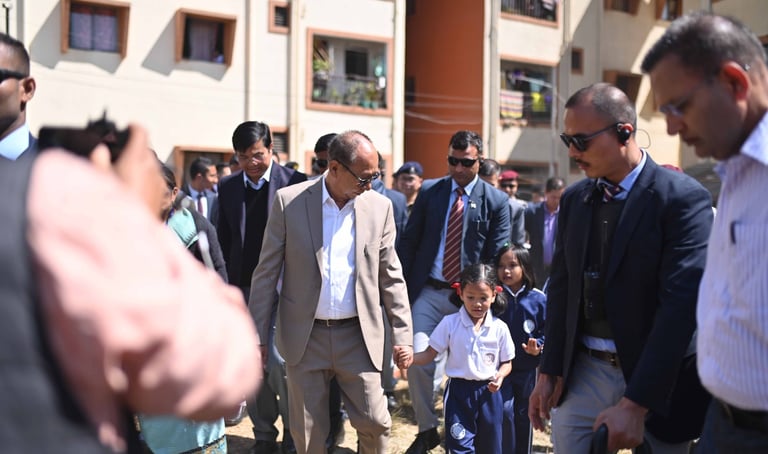
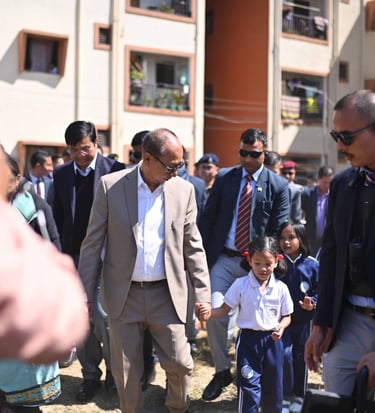
Imphal: In the quiet corridors of the Alternate Housing Complex at National Games Village, Langol, sorrow has lived for nearly three years. It sits beside cooking stoves, sleeps on borrowed mattresses, and wakes each dawn to the ache of memory. On Wednesday, as the Chief Minister, Yumnam Khemchand Singh, walked into the relief camp, that sorrow found a voice.
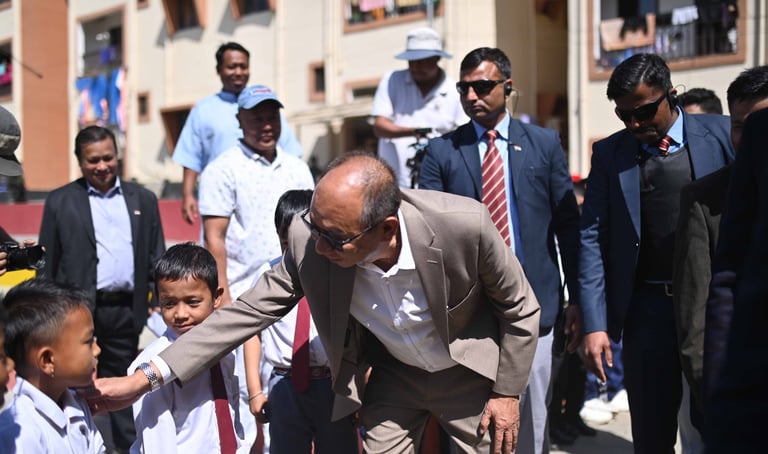
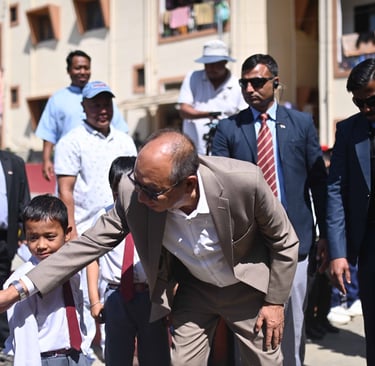
The State government released around ₹33 crore through Direct Benefit Transfer (DBT) to Internally Displaced Persons (IDPs). On paper, it was a financial exercise. In truth, it was something heavier—a public reckoning with the wounds of May 2023, when Manipur was torn by ethnic violence and thousands were driven from homes that had stood for generations.
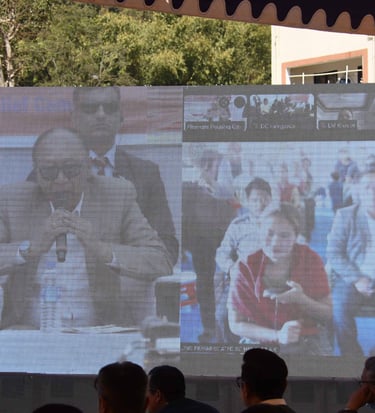
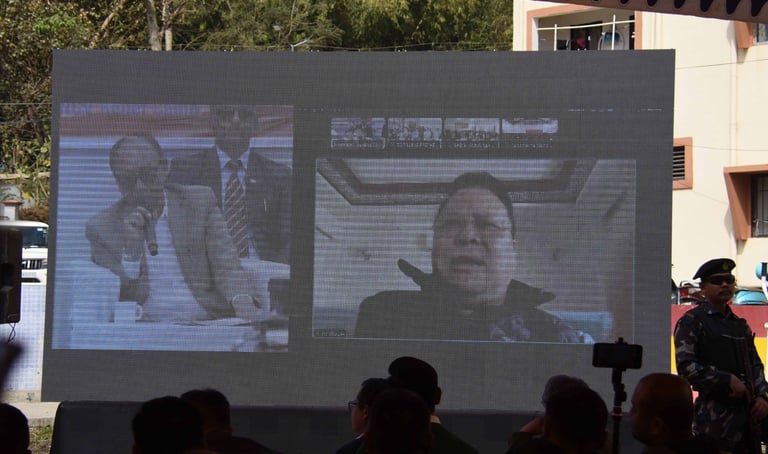
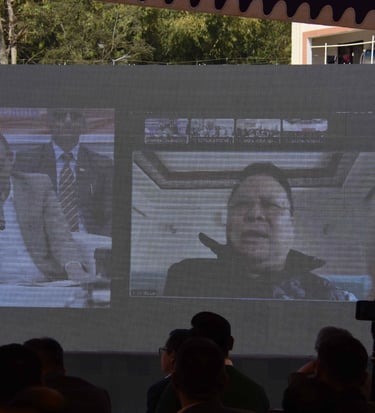
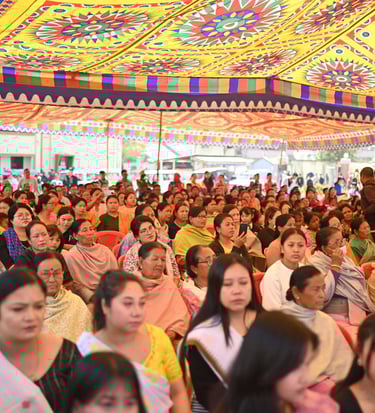
For the first time since that rupture, IDPs of Meitei and Kuki-Zo communities were brought together in a joint interaction—some present physically in Imphal West, others connected through video conference from Churachandpur and Kangpokpi. The symbolism was unmistakable. After President’s Rule and the formation of a new government, the first priority, the Chief Minister said, was clear: return people home with peace and goodwill.
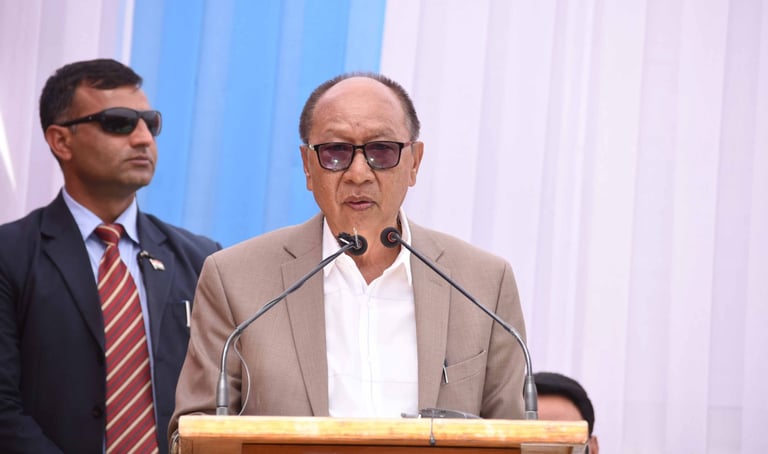
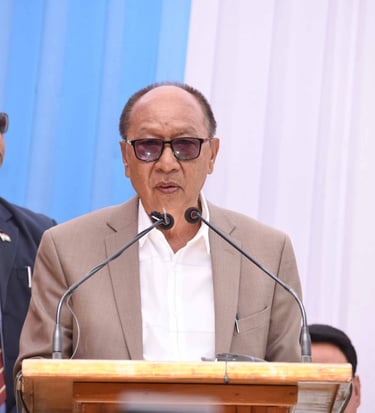
Tears Across a Divided Land
The interaction was less a programme and more a confession. A young Kuki girl from Kangpokpi, pursuing post-graduation against the odds, told the Chief Minister to consider her his daughter. Her voice trembled as she spoke of stalled studies and uncertain tomorrows. A Meitei woman from Moreh, now living in a camp for nearly three years, pleaded to see her “sweet home” once before life passes her by. A Kuki-Zo woman from Churachandpur spoke of medical emergencies and the impossibility of safe access to Imphal’s advanced hospitals.
“I will not let your tears go in vain,” the Chief Minister responded, acknowledging that while he could not promise an immediate date for universal return, his government would work to bridge the chasm of distrust between communities. He admitted what many whisper but few say aloud: fear still stalks the hills and the valley. Fear of entering each other’s areas. Fear of reprisal. Fear of history repeating itself.
The tears that flowed that afternoon were not only of grief. They were, in some fragile way, of revived insaniyat—humanity—surfacing after years of suspicion.
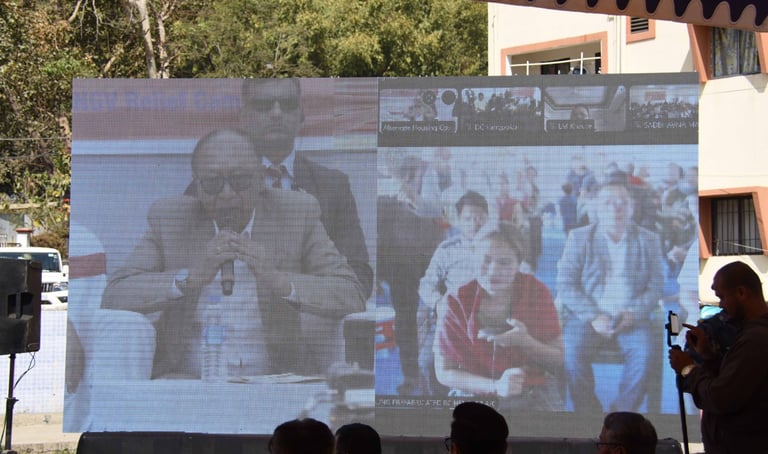
Life in Limbo
Since May 2023, tens of thousands have lived in makeshift shelters, prefabricated units, community halls, and temporary housing clusters. Children have grown up knowing relief camps as home. Elders have died without seeing their courtyards again.
The government announced ₹2,420 per person to replace worn-out mattresses and essential items—small things that mean dignity in tight spaces. Families whose houses were fully burnt are eligible for ₹1 lakh assistance. A first instalment of ₹25,000 has already been released to 9,314 households, with another 434 to receive it shortly. An additional ₹20,000 is to be extended to 9,748 eligible families.
Relief camps were never meant to be permanent. Yet, for many, they have become semi-permanent settlements. Livelihoods have collapsed. Farmers cannot reach the fields. Traders cannot cross old routes. Government job cards are tangled in district boundaries that have hardened in conflict. The Chief Minister assured that special job cards could be officially transferred and pending cases routed through local MLAs.
Education Interrupted, Futures Deferred
The Chief Minister acknowledged that nearly 8,000 Kuki-Zo students have seen their education disrupted. Around 2,000 managed to continue studies outside the State, but nearly 6,000 remain in uncertainty. “We need a special plan,” he said. This is no minor matter. Education is not just schooling—it is the bridge back to normalcy. When a generation’s learning is interrupted, the fracture extends decades into the future. Scholarships, relocation support, hostels in neutral zones, digital learning infrastructure—these cannot be afterthoughts. They must be central to any roadmap for recovery.
Healthcare and the Geography of Fear
Healthcare has become another silent casualty of division. With advanced medical facilities concentrated in Imphal and many doctors belonging to the Meitei community, Kuki-Zo patients in hill districts face severe constraints.
The Chief Minister cited a recent episode when BJP MLA Vungzagin Valte required urgent care in Churachandpur; two Meitei Pangal doctors were sent as they could travel without facing hostility. He publicly acknowledged their service, calling it unforgettable. He assured Kuki-Zo IDPs that those needing treatment in Imphal would receive foolproof security and that new ambulances would be deployed. Such assurances are necessary—but they must be institutionalised. Healthcare corridors, escorted medical transport, and inter-community medical teams can serve not only as service mechanisms but as symbols of shared humanity.
Beyond Relief: The Question of Return
Some IDPs have returned home. Many have not. The obstacles are not merely the physical reconstruction of burnt houses. They are psychological. Trust deficit is the phrase officials use. But in lived reality, it means this: Will my neighbour protect me, or turn away? Will my child be safe at school? Will the market be open to me? Will rumours ignite another blaze?
The Chief Minister appealed to Civil Society Organisations in both hills and valley to work together for restoration of normalcy. He stressed that Manipur is home to 36 communities and that unity must not remain a slogan. MLAs are to visit all 36 relief camps.
These gestures matter. But safe and dignified return demands more than visits.
It requires security guarantees rooted in community policing and neutral deployment. Transparent rehabilitation packages that cover reconstruction, livelihood restoration, and psychosocial support. Joint peace committees at village and ward levels, empowered and monitored. Clear timelines and public reporting, so hope is not left hanging. Independent grievance redressal mechanisms, accessible and trusted by all communities. Return must not be forced, rushed, or cosmetic. It must be voluntary, secure, and honourable.
The Moral Burden of Leadership
Leadership in times of fracture is not measured by the volume of announcements but by the quiet restoration of faith. Yumnam Khemchand Singh inherits not merely an office but a wound. The previous months under President’s Rule created distance between political authority and displaced citizens. The new government’s first outreach being directed toward IDPs is symbolically potent. Yet symbolism must now harden into policy.
The Chief Minister must play three roles at once: Bridge-builder — personally engaging leaders from Meitei, Kuki-Zo, and other communities, not only in formal meetings but in sustained dialogue. Administrator-in-chief — ensuring that financial assistance is timely, transparent, and corruption-free. Moral voice of the State — speaking consistently against hate, misinformation, and retaliatory rhetoric from any side. He must also resist the temptation to reduce the crisis to electoral arithmetic. IDPs are not vote banks. They are citizens uprooted from ancestral soil.
A Shared Destiny
Manipur’s tragedy is that both hills and valley carry their own narratives of hurt. But history will not forgive a generation that allowed temporary fury to erase centuries of coexistence. In the relief camp at Langol, when tears flowed from both Meitei and Kuki-Zo faces, they did not flow in different colours. They carried the same salt.
If those tears are to mean anything, they must water the soil of reconciliation. The road ahead is hard. Distrust runs deep. There will be provocations, setbacks, and political pressures. Yet the choice remains stark: either institutionalise division, or rebuild the grammar of coexistence that once defined Manipur’s mosaic. Safe and dignified return is not a favour from the State. It is a constitutional obligation.
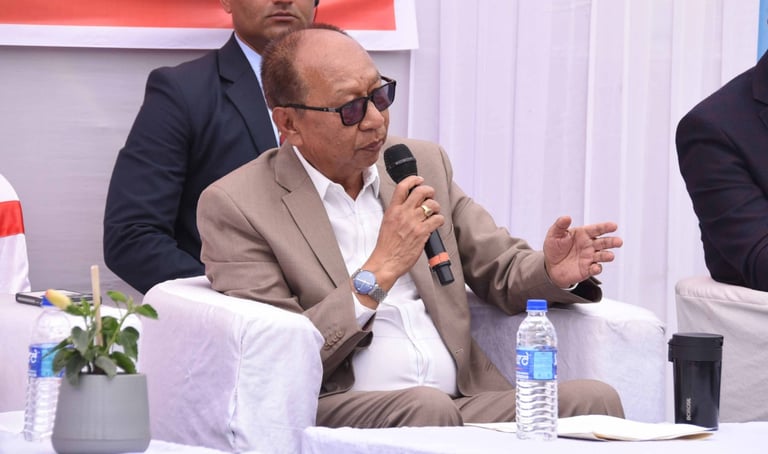
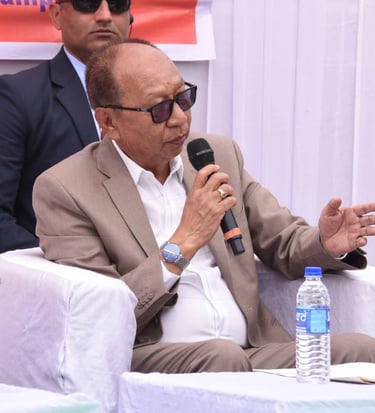
When the Chief Minister said, “I will not let your tears go in vain,” he spoke a promise that history will test. For the mothers in camps, the students without classrooms, the elders who long for their courtyards, and the children who deserve a future free from barricades, that promise must become policy.
Only then will the relief camps empty, not in silence, but in quiet homecoming. And only then will Manipur begin, truly, to heal.
CONTACT
Waari Singbul Office
Konung Mamang
Imphal – 795001
© Copyright 2023 Waarisingbul.com. All Rights Reserved