Manipur at the Edge of Decision: What Lies Ahead as President’s Rule Nears Its Constitutional Deadline
POLITICS
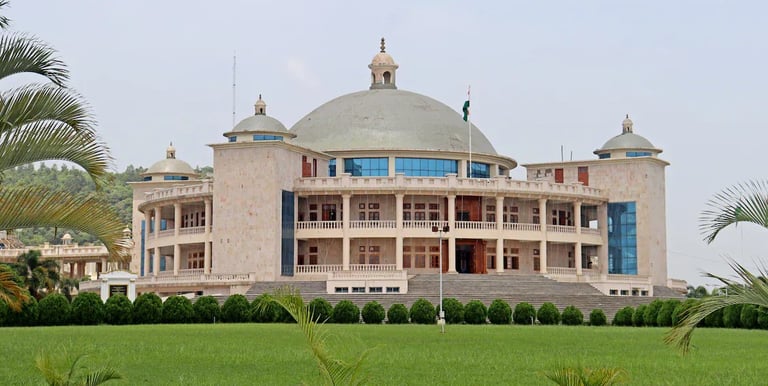
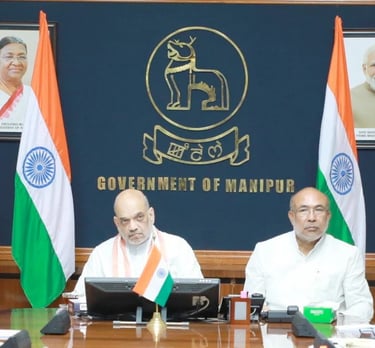
Imphal: As Manipur approaches 13 February 2026, the constitutional deadline for the current term of President’s Rule (PR), the state finds itself once again at a defining moment. What unfolds over the next few days will not merely determine who governs Manipur, but will also test India’s commitment to constitutional federalism, democratic restoration, and conflict resolution in one of its most sensitive border states.
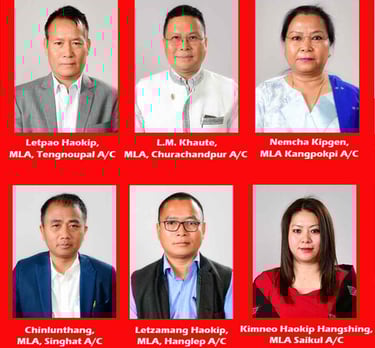
Under Article 356 of the Indian Constitution, President’s Rule is meant to be an exceptional, temporary arrangement. It is not designed as a substitute for political resolution or a long-term governance mechanism. Yet Manipur’s prolonged ethnic conflict, administrative paralysis, and breakdown of trust between communities have stretched this “temporary” provision to its limits.
With the clock ticking, New Delhi faces three broad choices: Extend President’s Rule through parliamentary approval—possibly aided by constitutional amendment or National Emergency, invoke a National Emergency to legally justify continuation of central rule, or install a popular (elected) government, despite unresolved political and security contradictions. Each option carries profound consequences—not just for Manipur, but for Indian democracy itself.
The Constitutional Limits of President’s Rule
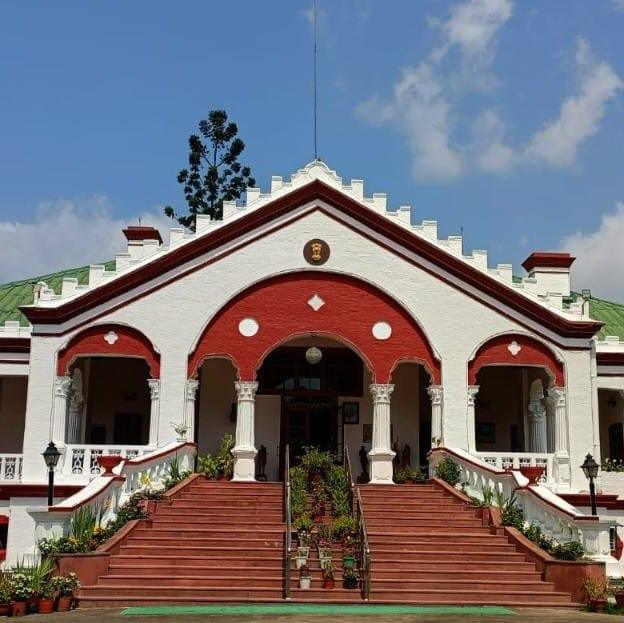
The Constitution places a clear ceiling on President’s Rule. Extensions beyond one year require extraordinary conditions such as a National Emergency or certification that elections cannot be held. Manipur is already well into constitutionally sensitive territory.
Extending PR beyond February 2026 would therefore require the Union government to justify its actions on the floor of Parliament. In an in-session Parliament, this becomes politically risky. It opens the government to charges of democratic backsliding, federal overreach, and selective application of constitutional norms—especially in a politically polarized national environment.
It is this national political cost—as much as Manipur’s internal situation—that is pushing the Government of India to actively explore the installation of a popular government.
National Emergency or Constitutional Amendment: Legal but Dangerous Paths
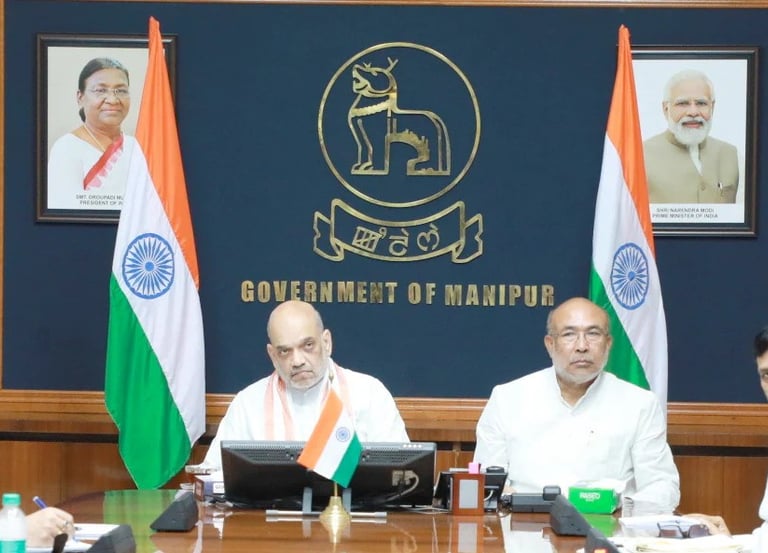
Invoking a National Emergency to extend President’s Rule may be legally possible, but politically explosive. National Emergency is intended for threats to the sovereignty and integrity of India—war, external aggression, or armed rebellion. While Manipur has witnessed grave violence and internal unrest, using this provision primarily to manage state-level political deadlock risks diluting its gravity. Similarly, amending the Constitution to extend President’s Rule would be legally feasible but normatively corrosive. Such a move would reopen painful debates about the misuse of Article 356 and undermine hard-earned judicial safeguards established after the S.R. Bommai judgment. The precedent it sets would haunt Centre–State relations far beyond Manipur. For New Delhi, both options carry reputational and political risks that outweigh their short-term administrative convenience.
The Push for a Popular Government—and the BJP’s Electoral Calculus
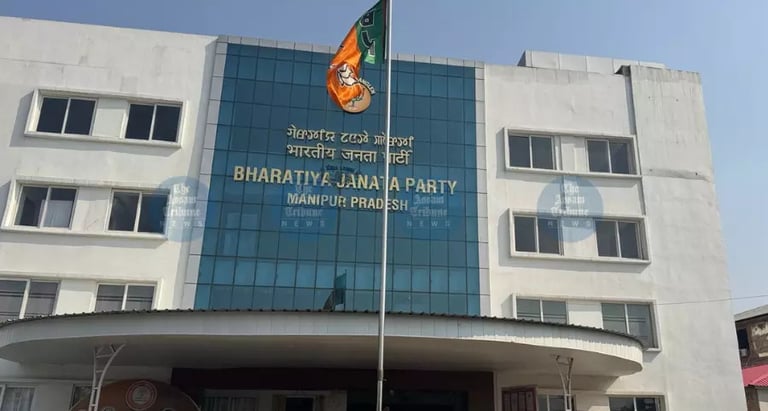
The installation of a popular government is increasingly being seen as the least damaging option. For the Union government—and particularly for the BJP—this is not merely about restoring democracy; it is also about electoral continuity. With the next Manipur Legislative Assembly election due in 2027, installing a popular government now would allow administrative normalization before elections, enable political reorganization on the ground, reduce anti-incumbency against the Centre, and improve the BJP’s chances of returning to power in a restive state. A prolonged President’s Rule risks creating a governance vacuum that could be electorally costly for the ruling party at both the state and national levels.
The Kuki-Chin-Zo Dilemma: Political Choice or Political Compulsion?
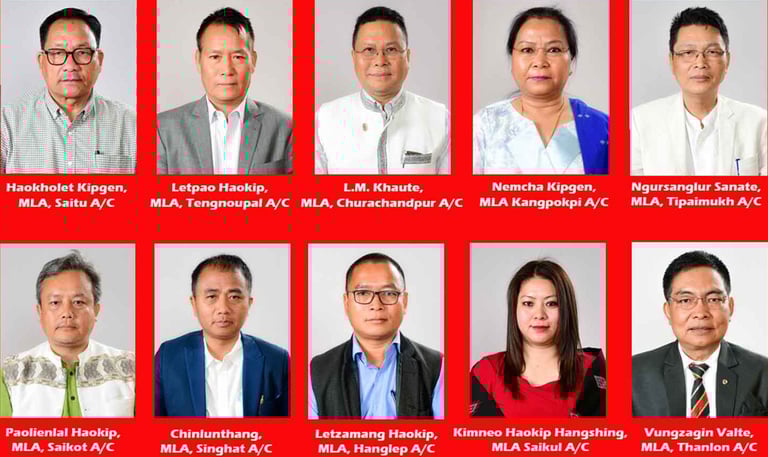
The biggest obstacle to installing a popular government lies in the unpredictable endorsement of the 10 Kuki-Chin-Zo (KCZ) legislators who presence in the government formation is a must. Crucially, their indecision is not rooted in personal political ambition but in compulsion imposed by larger power holders within their community. The Suspension of Operations (SoO) groups, along with their frontal organizations—the Indigenous Tribal Leaders’ Forum (ITLF), Kuki Zo Council, Kuki Inpi, and armed Kuki-Zou village guards—have made it clear that participation in a Manipur state government without realization of Separate Administration is unacceptable.
For these actors, installation of a popular government under the existing state framework is equivalent to temporarily or permanently abandoning their core political demand, legitimizing a political structure they fundamentally contest, and weakening their bargaining position vis-à-vis New Delhi. As a result, the 10 KCZ legislators find themselves politically constrained. Supporting a government risks internal backlash and delegitimization within their own community; withholding support prolongs central rule and political stagnation.
The Centre’s Rejection of a Union Territory with Legislature
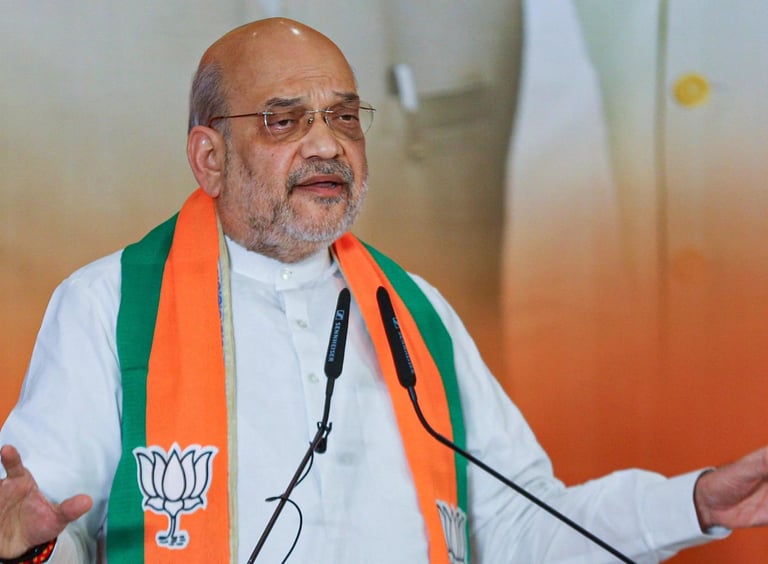
Recent interactions between the Government of India and Kuki-Chin-Zo stakeholders have further narrowed political options. The Centre has categorically rejected the demand for a Union Territory with legislative powers, signalling that radical territorial restructuring is off the table—at least for now. This rejection has left the KCZ political leadership with limited manoeuvring space. While Separate Administration remains their stated goal, the immediate political reality suggests that joining a popular government may be the only remaining avenue to retain relevance and bargain power from within the system. Thus, endorsement of a popular government, if it comes, will likely be reluctant, tactical, and heavily conditional—not an ideological shift.
Valley Sentiment and the Question of Chief Ministership
In the Imphal Valley, public opinion overwhelmingly favours the installation of a popular government. There is also a strong preference—particularly among Meiteis—for a Meitei Chief Minister, reflecting demographic realities and political sentiment. However, the Centre is acutely aware that appointing a CM perceived as partisan or unacceptable to hills, particularly to Kuki-Chin-Zo communities could destabilize an already fragile situation. As a result, New Delhi is likely to push for a consensus or “neutral” figure, someone seen as administratively competent, politically non-confrontational, and ethnically less polarizing.
The Naga Option and the Rise of Dinganglung Gangmei
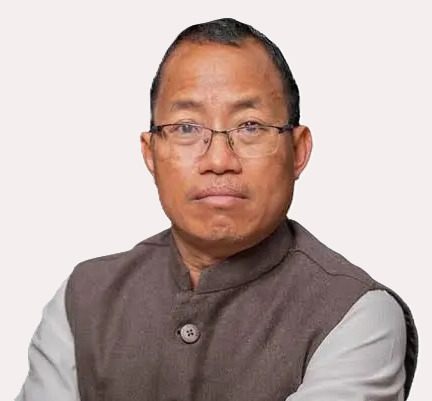
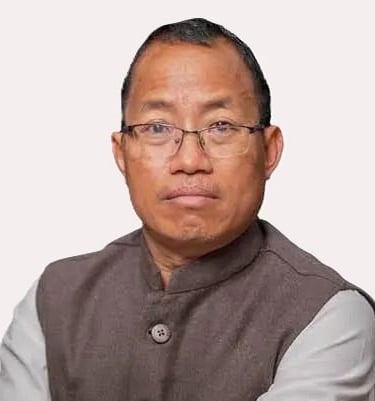
It is within this context that the possibility of a Naga BJP legislator as Chief Minister has gained traction. Among the names circulating, Nungba MLA, Dinganglung Gangmei has emerged as a frontrunner. Gangmei’s profile fits the Centre’s requirements: a retired IAS officer, bringing administrative credibility, a first-time MLA, not deeply entrenched in factional politics, a Naga leader, potentially acceptable to both valley and hill constituencies, his electoral victory over Congress heavyweight, Gaikhangam Gangmei signals political legitimacy.
For the Centre, D. Gangmei represents a low-risk, high-manageability option—someone who can preside over a transitional phase without triggering immediate backlash.
Other Names in the Public Discourse
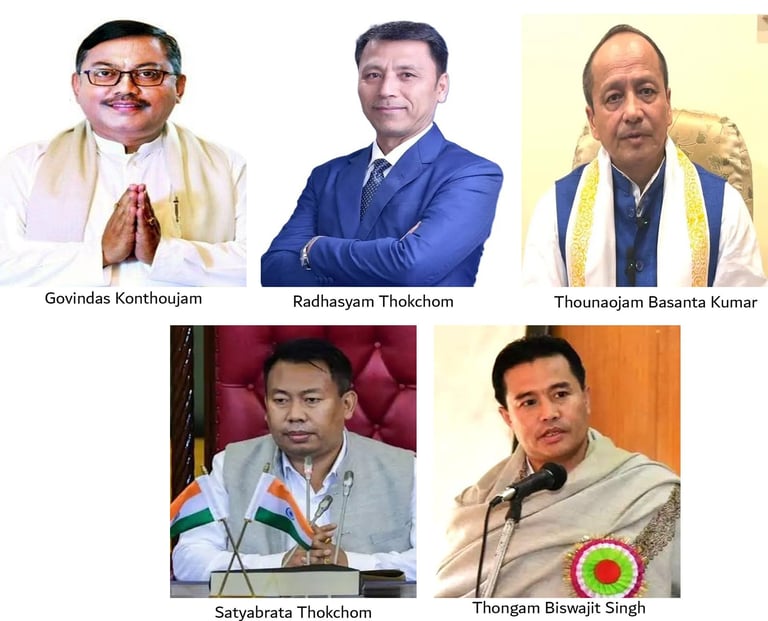
Several BJP leaders are also being discussed in public and political circles. These include Govindas Konthoujam, regarded as experienced and articulate; Radheshyam Thokchom, a retired IPS officer known for his organisational skills and loyalty to the party; Thounaojam Basanta, another retired IPS officer and the son of former BJP MP and Union Minister Thounaojam Chaoba, who is considered to wield significant influence; Thokchom Satyabrata Singh, seen as disciplined and non-controversial; and Thongam Biswajit Singh, the BJP’s longest-serving legislator in terms of party affiliation.
Despite these discussions, BJP legislators have reportedly expressed unanimous willingness to accept whoever the Centre chooses, reflecting the party’s centralized decision-making culture.
The Case for N. Biren Singh’s Return
There is also a persistent section of public opinion—particularly among parts of the Meitei and Naga population—that favours the reinstallation of former Chief Minister N. Biren Singh.Supporters argue that Biren Singh remains the most powerful and experienced MLA, who has demonstrated the ability to confront issues like illegal immigration, narco-trafficking, and border security. They expressed that in a precarious, security environment, political strength may matter more than symbolic neutrality. However, his return also risks reopening old fault lines and may face resistance from communities that associate his tenure with escalation of tensions.
The Missing Conversation: A Roadmap to Normalcy
Amid all the noise about President’s Rule deadlines and Chief Ministerial contenders, a critical absence stands out: There is no serious public roadmap to normalcy.
Neither the political class, nor civil society organizations, nor intellectual groups have articulated a coherent plan for restoring rule of law, demilitarizing civilian spaces, rebuilding inter-community trust, or resettling internally displaced persons (IDPs). The obsession with the 13 February deadline risks putting the cart before the horse.
Rule of Law Before Popular Government
Above ending President’s Rule, the priority must be enforcement of the rule of law, particularly in Kuki-Chin-Zo–dominated hill districts such as Churachandpur and Kangpokpi.
Armed individuals roaming freely, threatening civilians, and operating parallel authority structures undermine any attempt at democratic restoration. A recent and chilling example is the abduction and on-camera killing of Meitei tech professional Rishikanta Mayanglangbam in Churachandpur—a crime that had the potential to reignite large-scale violence. The fact that there was no retaliatory violence from the valley speaks volumes about public restraint. But restraint cannot be indefinitely relied upon.
The SoO Imperative and Disarmament
A credible path forward requires ensuring SoO groups are confined to designated camps, securing all arms under proper custody, recovering illegal weapons, and acting decisively against non-SoO militant groups opposed to peace and democratic processes. Without this, any popular government will operate under the shadow of armed coercion.
Resettlement, Reconciliation, and the Return of Normalcy
Once security is restored, the next priority must be the resettlement of internally displaced persons from all communities. Only when people return home can normal economic activity, social interaction, and political dialogue resume. People-to-people contact is essential to prevent vested interests from exploiting fear, misinformation, and communal animosity—particularly between the Meiteis and the Kuki-Chin-Zo.
Conclusion: Democracy Cannot Be Cosmetic
Manipur stands at a fragile intersection of constitutional obligation and political reality. Ending President’s Rule is important—but ending lawlessness, fear, and parallel power structures is more urgent.
Installing a popular government without first restoring rule of law risks creating a cosmetic democracy—elected, but ineffective; legitimate, but powerless. As February 2026 approaches, the real question is not merely who will govern Manipur, but how governance itself will be reclaimed—from guns to institutions, from compulsion to consent, and from mistrust to dialogue. Only then can Manipur move from crisis management to genuine recovery.
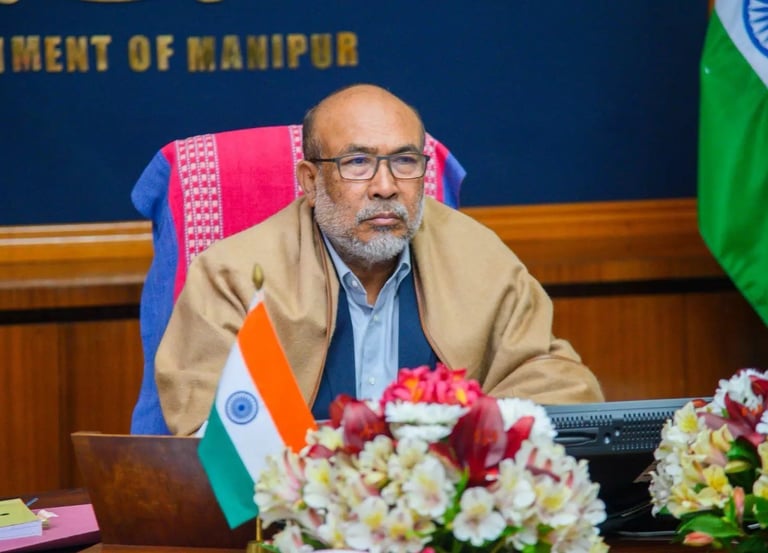
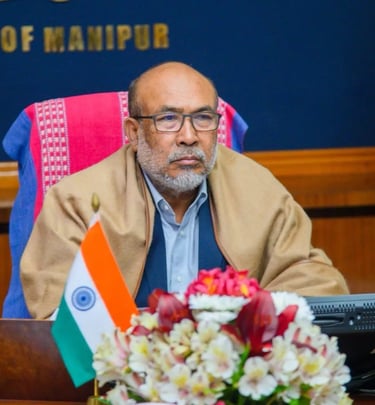
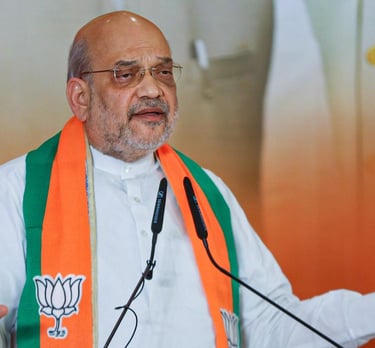
Image: Former Chief Minister of Manipur N.Biren Singh
Image: Nungba M.L.A. Dinganglung Gangmei
CONTACT
Waari Singbul Office
Konung Mamang
Imphal – 795001
© Copyright 2023 Waarisingbul.com. All Rights Reserved