
Manipur Faces Looming Shortage of Essential Commodities as Highway Crisis Drives Away Freight Operators
ANALYTICAL
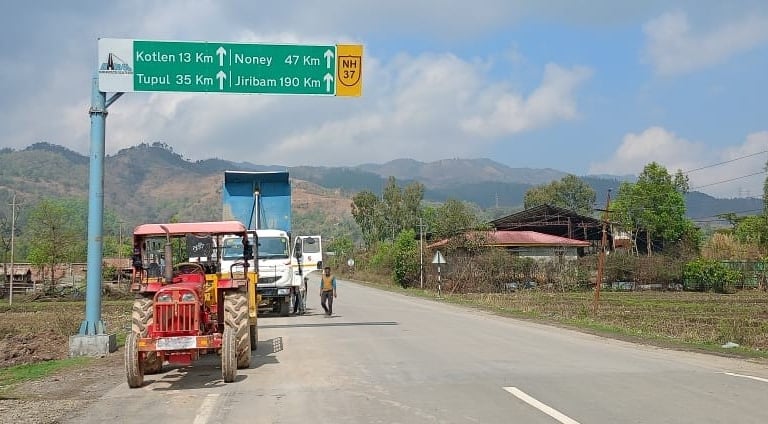
Imphal: Manipur is staring at the possibility of a fresh shortage of essential commodities as transport operators from outside the State are increasingly reluctant to send freight trucks to Manipur, citing mounting operational costs, prolonged travel time and uncertainty on the State's two lifeline National Highways. The emerging transport crisis threatens to aggravate an already fragile economy that has struggled to recover from the ethnic unrest that erupted on 3 May 2023, which severely disrupted trade, industry and normal economic activity across the State.
Image: Imphal to Jiribam NH-37
Round-trip travel time for trucks rises from three to nearly 30 days, making transport to Manipur increasingly unviable
For a landlocked State dependent almost entirely on road transport for the supply of food grains, vegetables, construction materials, petroleum products, medicines and other essential commodities, the deteriorating condition of the highway network has begun to affect both the availability and affordability of goods.
Transport business becoming commercially unviable
The principal reason behind the reluctance of transporters, traders say, is the dramatic increase in the time taken by freight vehicles to complete a journey to Manipur and back.
Before the outbreak of the conflict, a freight truck operating between Guwahati and Imphal could complete a round trip in approximately 3 to 4 days, enabling transporters to undertake 8 to 10 trips every month.
Today, the same truck takes anywhere between 25 and 30 days to complete a single round trip. According to traders, the sharp increase in travel time has significantly reduced the earning capacity of transporters while substantially increasing fuel consumption, maintenance costs, driver wages and other operational expenses.
"Transporters simply do not find it economically viable to send their vehicles to Manipur anymore," said Nahakpam Shanta, essential commodities wholesale distributor.
"Earlier, a truck could make 8 to 10 trips between Guwahati and Imphal every month. Now it struggles to complete even one trip. The overhead costs continue to increase while earnings continue to fall. No transporter wants to operate at a loss."
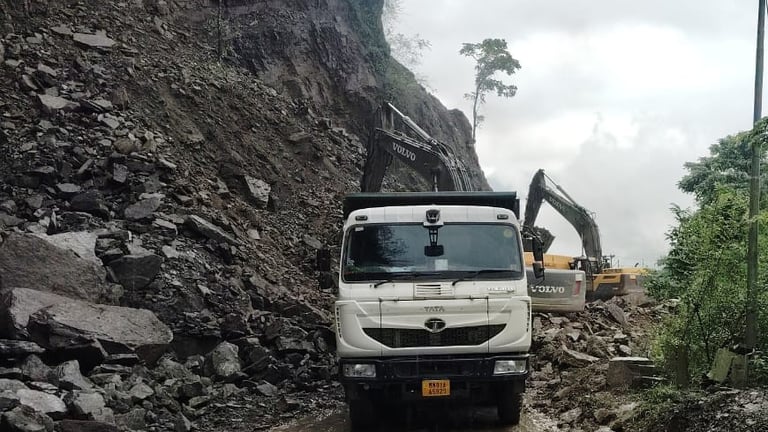
Image: Bad Road condition restircts movement along NH 37
NH-2 virtually inaccessible, NH-37 under severe stress
The crisis stems largely from the continued disruption of National Highway-2, the traditional Imphal-Dimapur route connecting Manipur with the rest of the country. The highway has witnessed recurring blockades arising from competing demands by different groups, forcing most freight vehicles to divert through National Highway-37, the Imphal-Jiribam route. However, NH-37 itself is far from a reliable alternative. Large stretches of the highway are presently undergoing widening and upgrading works, resulting in severely damaged road surfaces, bottlenecks and long traffic delays.
According to Shanta, loaded trucks now require 11 to 15 days, and in some cases up to 30 days, merely to complete the Guwahati-Imphal-Guwahati journey through NH-37.
Security convoy system adds to delays
The prevailing security situation has further complicated freight movement. Commercial vehicles travelling along NH-37 are allowed to move only as part of security convoys. While the convoy system ensures protection for transporters, traders argue that it has also become a major logistical bottleneck.
Only two or three convoys operate daily, with no convoy movement on Sundays. As a result, hundreds of freight trucks remain stranded for days near the Assam-Manipur border in Jiribam awaiting clearance. Traders estimate that between 2,000 and 5,000 loaded trucks are often waiting at various points along the route for convoy movement.
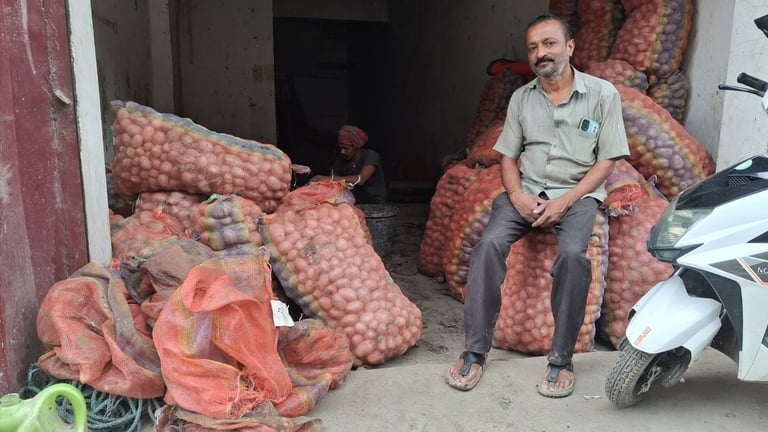
Image: A grocery dealer waits for his stocks to arrive in Imphal
For trucks carrying vegetables, fruits and other perishable commodities, the prolonged waiting period often results in heavy spoilage. According to traders, losses due to deterioration of perishable goods may reach 60 to 70 percent in certain consignments.
Alternative route also poses challenges
Transporters also face difficulties on the Khatkhati-Jessami-Ukhrul-Imphal route. Heavy multi-axle trucks are reportedly not permitted on portions of the highway, forcing traders to unload consignments and shift them to smaller six-wheel trucks. The additional handling increases both transportation costs and delivery time.
Freight charges rise sharply
The rising cost of transportation has inevitably been passed on to consumers. According to traders, freight charges for essential commodities transported through NH-37 have increased from approximately ₹5.60 per kilogram before the crisis to around ₹8.50 per kilogram at present.
Transportation charges for potatoes alone have risen from ₹5 per kilogram to ₹7.50 per kilogram.
For a 25-tonne truck, transport expenditure has reportedly increased from approximately ₹1.25 lakh before the crisis to nearly ₹1.88 lakh today.
Building materials have also become considerably more expensive. Freight charges for cement and steel have risen from around ₹1,350 per tonne to nearly ₹2,000 per tonne, with transporters often demanding additional payments to compensate for delays encountered during transit.
Prices continue to climb
The increase in freight charges is already reflected in retail markets across Imphal. A market survey revealed significant increases in the prices of several essential commodities. Onions, which previously sold between ₹25 and ₹30 per kilogram, are now retailing at around ₹50 per kilogram. Potatoes have risen from ₹20 to ₹30 per kilogram, while edible oil has increased from ₹210 to ₹240 per litre. Garlic now costs approximately ₹280 per kilogram, up from ₹230.
Fruit prices have also risen sharply. Apples are currently selling between ₹350 and ₹400 per kilogram, compared to ₹200–250 earlier, while a box of grapes now costs approximately ₹1,500, up from around ₹1,000.
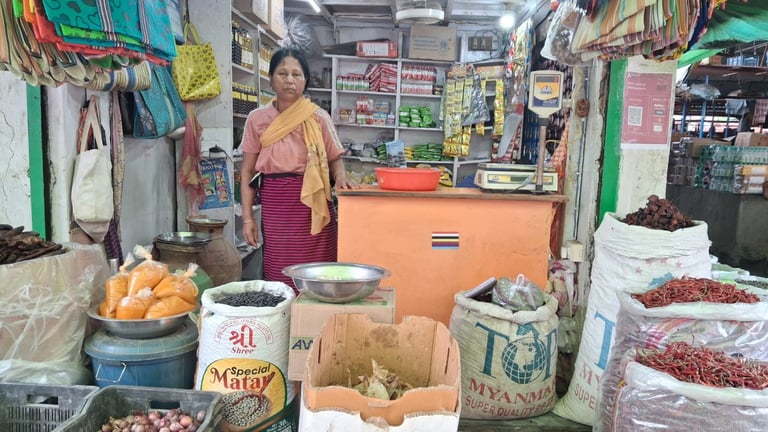
Image: Fruit vendors in Manipur likely to face scarcity due to transport bottleneck
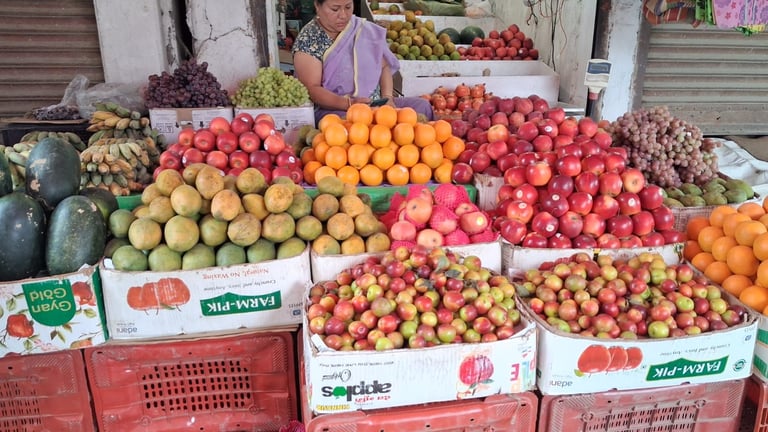
Image: A Gorcery Vendor witnessing dipping of business
Construction materials have witnessed similar increases. Traders said the retail price of popular cement brands has increased by ₹80–100 per bag, largely due to higher freight costs.
Shortages feared if situation persists
Wholesale traders have warned that the State could begin experiencing shortages of several commodities if transport bottlenecks continue through the monsoon season. The risk is compounded by the possibility of landslides and further deterioration of NH-37, which remains the principal supply corridor into Manipur.
With convoy movement prioritising petroleum tankers, traders fear that fewer trucks carrying vegetables, food items and other commercial goods will be able to enter the State in the coming weeks.
Economic consequences
Economists believe the transport crisis is contributing to what may be described as conflict-induced inflation, where transportation costs, security arrangements and logistical uncertainty significantly inflate the prices of goods.
For consumers, this translates into higher household expenditure at a time when purchasing power has already weakened.
For businesses, particularly wholesalers and distributors, shrinking profit margins and rising operational costs threaten the sustainability of trade itself.
Unless uninterrupted movement is restored on Manipur's national highways and alternative routes are made fully motorable, traders fear the State could soon face not only escalating prices but also periodic shortages of essential commodities—further deepening the economic hardship already experienced by people since the outbreak of the conflict in May 2023.
CONTACT
Waari Singbul Office
Konung Mamang
Imphal – 795001
© Copyright 2023 Waarisingbul.com. All Rights Reserved