Manipur’s New Chief Minister and the Grammar of Intent
POLITICS
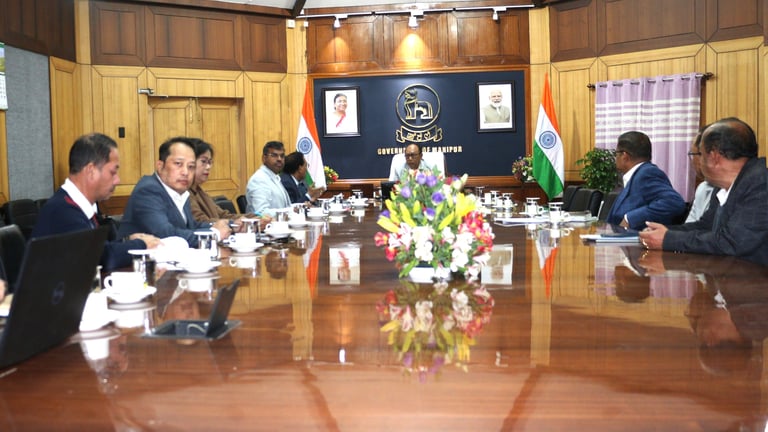
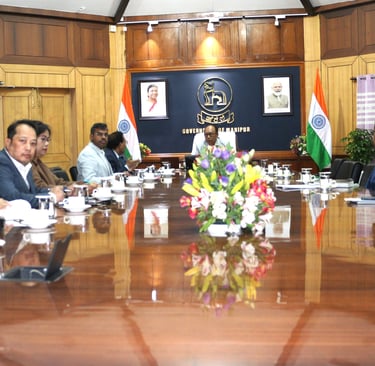
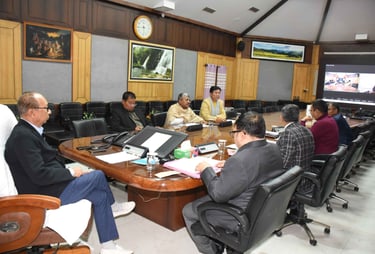
Image: C.M. reviews economic revival of Manipur
Imphal: In Manipur—where memory lingers, and grievances travel across generations—the first hour of leadership can weigh as heavily as the first year. Yumnam Khemchand Singh understood this arithmetic well. Within minutes of taking oath as the 13th Chief Minister, he convened a Cabinet meeting alongside five newly inducted ministers. The approval of the Governor’s Address for the 7th Session of the 12th Manipur Legislative Assembly was cleared without delay. The signal was unmistakable: procedural legitimacy would precede spectacle. Governance would not idle in ceremony.
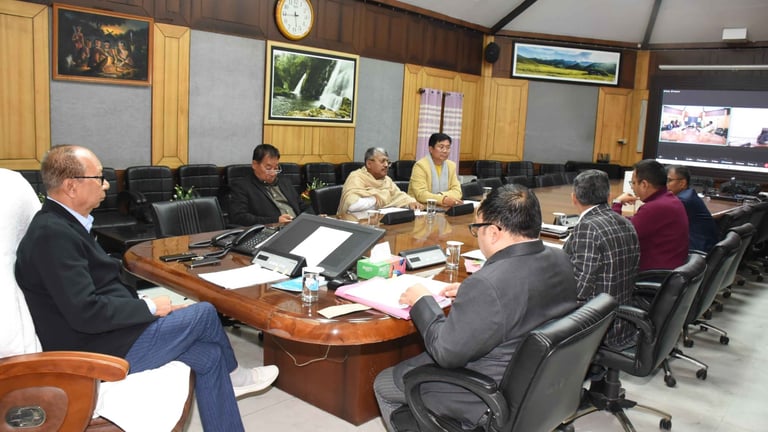
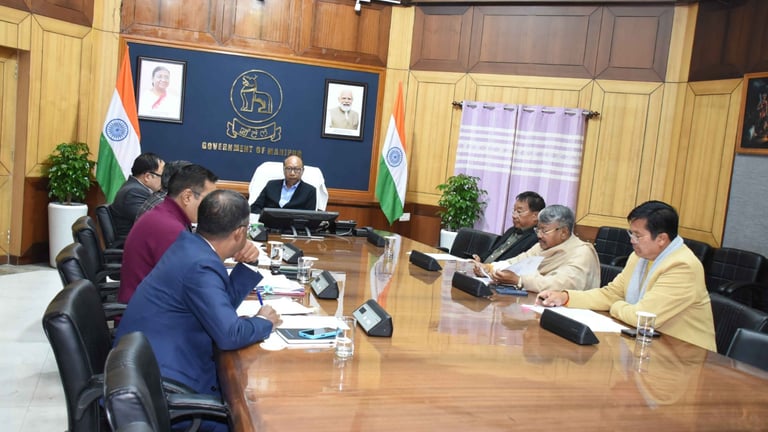
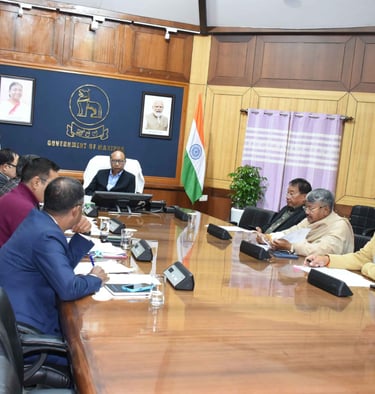
He then secured the motion of confidence on the floor of the House—swiftly, without theatricality. In an Assembly shaped by fragmentation and fatigue, this was less a triumph than a necessity. Delay breeds suspicion; hesitation invites intrigue. By closing the confidence question early, the new Chief Minister imposed order upon uncertainty.
Yet, the 7th Session left seasoned observers wanting more. With the financial year drawing to a close on 31 March, expectation leaned toward a budget session that would fast-track budget revisions for 2025–26. In ordinary circumstances, a newly installed government often receives cooperative latitude from across party lines in matters of fiscal continuity. That window was not fully utilised. The absence of a decisive budgetary push exposed structural constraints within the dispensation—constraints not entirely of the Chief Minister’s making, but real nonetheless.
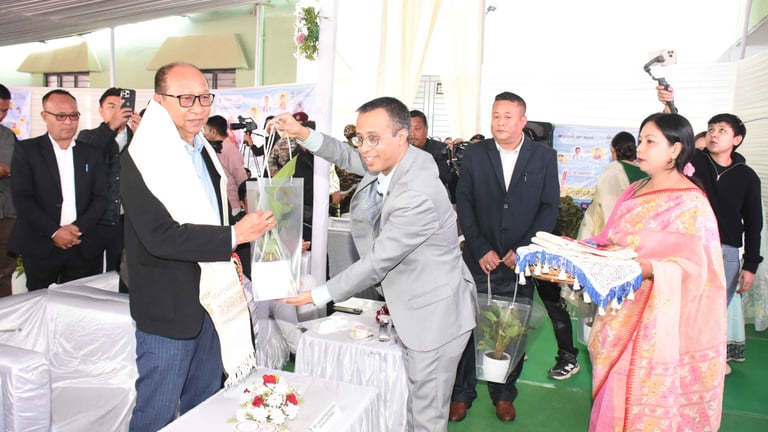
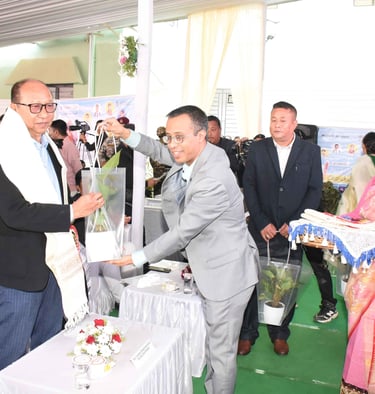
Image: C.M. attends 9th edition of PARIKSHA PE CHARCHA 2026
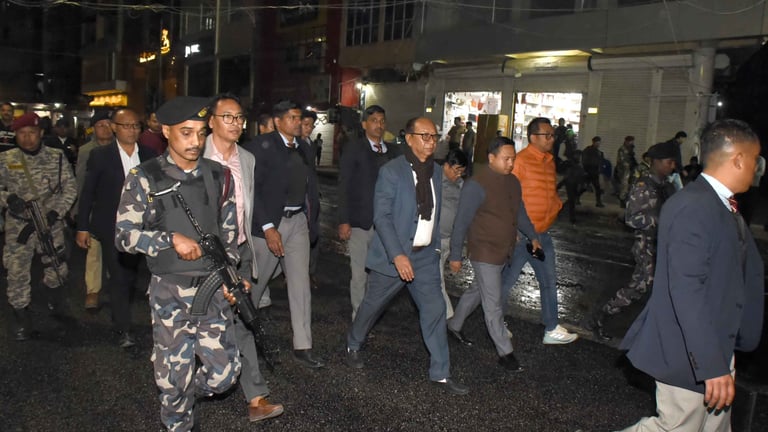
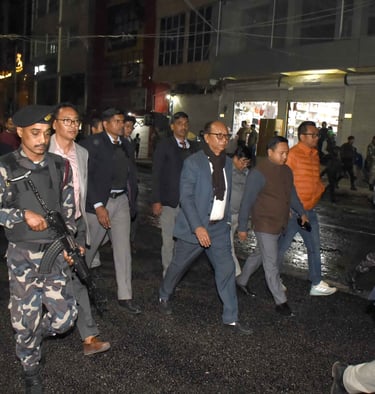
Image: C.M. inspects development of Thangal Bazar
To his credit, subsequent Cabinet meetings have come in disciplined succession. Their focus outlines the government’s working thesis: conflict cannot be treated merely as a security disturbance; it is a developmental paralysis. Unlock livelihoods, and you weaken hostility. The emphasis on integrated farming as an engine of revival reflects a sober calculation. Agriculture cuts across ethnicity. It does not recognise hills or valley; it recognises land and labour. In a state fractured by identity, farming speaks an older, common language.
Similarly, the push to fast-track long-pending civil works—renovation of Thangal Bazaar, concretisation of roads, clearance of frozen project files—may lack glamour, but they strike at the heart of public confidence. In today’s Manipur, a completed marketplace is not trivial; it is proof that the state machinery still breathes.
The Chief Minister’s visible alignment with the central leadership’s stability-and-development narrative has drawn commentary. Some dismiss it as public relations exercise. That reading may be thin. In Manipur’s present condition, coherence with New Delhi is less about optics and more about institutional survival. Discord at the top would only embolden instability on the ground.
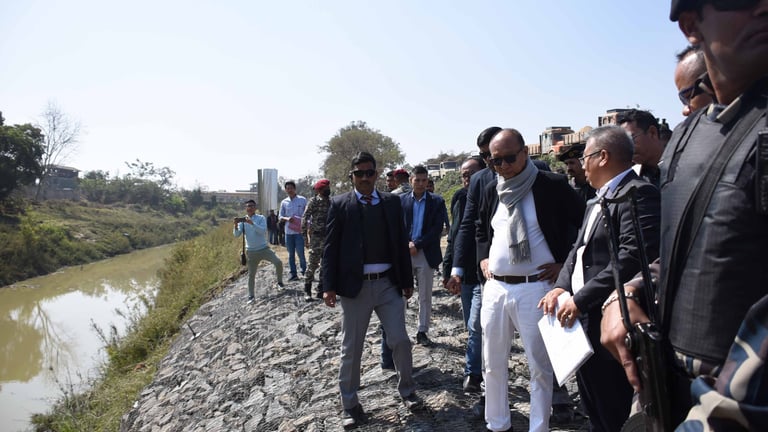
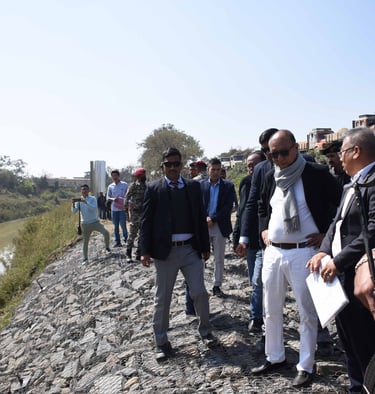
Image: C.M. inspects embankment work taken up along the Imphal River
Parallel to this alignment runs a more delicate endeavour—to reclaim the moral centre of Manipur as shared terrain. Outreach to mothers, cross-bench legislators, ordinary citizens, and crucially to members of the Kuki-Zo community, reflects an attempt—tentative but necessary—to reopen channels of trust. Silence would have been easier. It would also have been fatal.
One gesture cut through calculation. The Chief Minister personally arranged an air ambulance and saw off the wounded Valte. That act was not administrative compulsion; it was human acknowledgement. In a state numbed by casualty counts, it restored individuality to suffering. Offices can harden men. In that moment, the office did not.
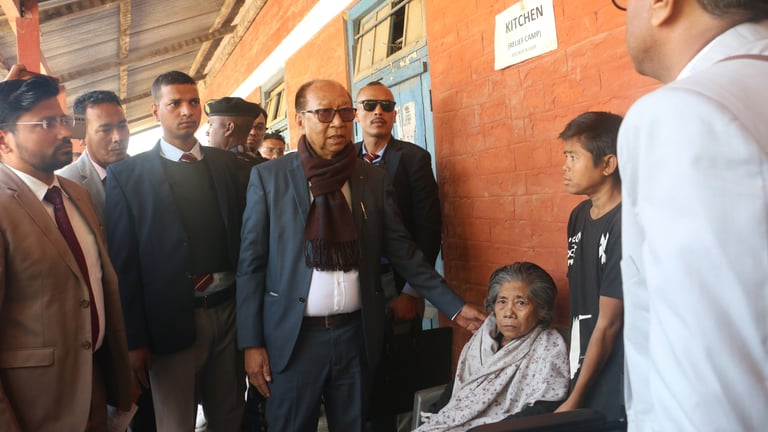
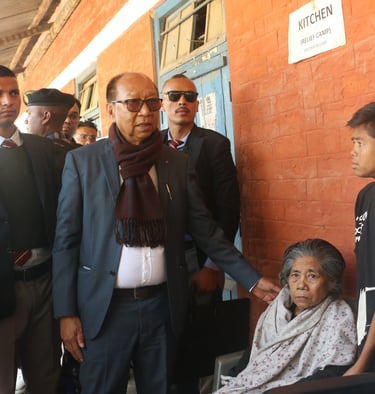
Image: C.M. visits Relief Camps in Jiribam
Thus, goodwill and symbolism must now give way to institutional consolidation. The challenge ahead is not merely to project inclusivity but to operationalise it—particularly in engaging proponents of separate administration demands. Kangpokpi has remained largely calm; Churachandpur has witnessed street protests. Words spoken in defence of dialogue over guns are important. But dialogue must now materialise beyond statements.
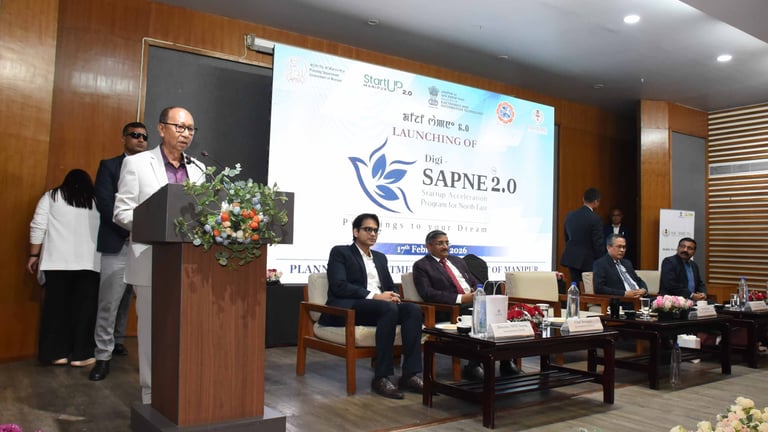
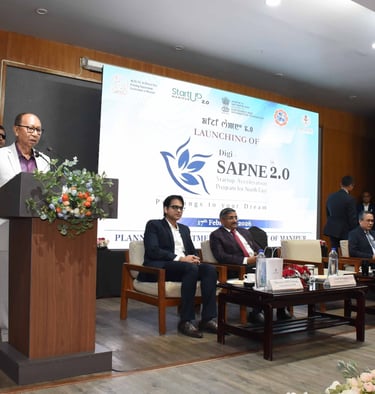
Image: C.M. launched Digi SAPNE 2.0
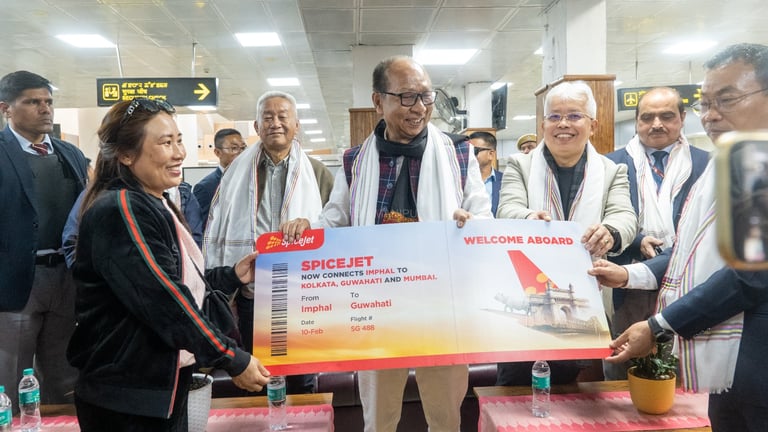
Image: C.M. Khemchand along with Inner Manipur M.P. Dr. Bimol Akoijam launches Spicejet flight services
Strip away the ceremony, and the narrative is clear: Khemchand Singh has sequenced his opening moves with intention. Legitimacy first. Spiritual grounding next. Administrative activation thereafter. Public empathy visible. Political inclusion attempted.
This is classical statecraft—measured, layered, unsentimental. Yet Manipur has seen intention before. What it now demands is endurance. The ground remains unstable. Trust is brittle. Every promise will be weighed against lived experience.
The task before the 13th Chief Minister is not merely to govern territory. It is to restore faith in coexistence. And faith, once fractured, does not return through proclamation. It returns only through persistence, fairness, and results that can be touched.
In Manipur today, belief is the hardest currency to mint.
CONTACT
Waari Singbul Office
Konung Mamang
Imphal – 795001
© Copyright 2023 Waarisingbul.com. All Rights Reserved