Political Leverage in a Fractured Land: What the Kuki–Naga Hostage Crisis Reveals About Manipur’s Shifting Power Equation
OPINION

Imphal: In a conflict already fractured by fear, grief and competing historical narratives, perception often matters almost as much as reality. In Manipur, where ethnic violence since May 3, 2023 has shattered trust between communities, one perception is increasingly gaining ground—not only among the Meiteis in the valley but now also among sections of the Naga population in the hills: that the Kuki–Zo community, despite being a party to the conflict, appears to enjoy greater political access and leverage with the Government of India than either the Meiteis or the Nagas.
Whether entirely true or partially shaped by the anxieties of war, this perception is becoming politically consequential. The issue is no longer merely who suffers most in conflict, but whose suffering appears to trigger faster political responsiveness from the state.
The recent abduction and release episode involving Kukis and Nagas has only intensified such concerns. For many observers, the sequence of events has come to symbolise what they see as unequal political responsiveness in Manipur’s troubled ethnic landscape.
At the centre of the debate lies an uncomfortable question: Has the Kuki–Zo emerged as the community with the greatest political leverage in Manipur’s conflict?
The Politics of Access in a Time of Conflict
Conflicts are rarely shaped only by force on the ground. They are equally shaped by who has access to political power, whose anxieties receive immediate attention and whose grievances trigger swift state response.
Since the violence erupted in Manipur in May 2023, the Kuki–Zo leadership has consistently maintained strong political channels with New Delhi. Delegations of Kuki civil society organisations and political representatives have frequently met Union leaders, including officials in the Union Home Ministry, to articulate demands ranging from security concerns to political arrangements, including separate administrative mechanisms.
Such access is not inherently unusual. In democratic systems, vulnerable groups naturally seek political protection. Yet, in Manipur’s intensely polarised atmosphere, repeated high-level engagement with Kuki–Zo actors—contrasted against frustrations expressed by Meitei and increasingly Naga organisations—has contributed to perceptions of political asymmetry.
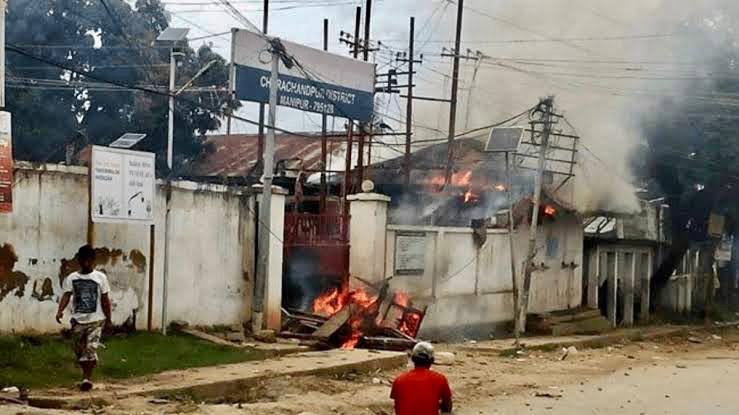
Among many Meiteis, the belief hardened early in the conflict that the Centre was reluctant to act firmly against armed Kuki militant groups operating under the Suspension of Operations (SoO) agreement. Despite repeated allegations of armed movement, fortified hill positions and militant activity, valley-based civil groups frequently accused the security establishment of adopting a restrained approach in Kuki-dominated areas while pursuing visibly forceful security measures in the valley.
Repeated demands for stricter action against SoO militant groups also produced frustration when operations appeared limited or inconsistent. The prolonged continuation of the SoO framework itself became contentious, with critics questioning whether armed groups accused of involvement in violence should continue under arrangements originally designed for ceasefire and peace-building.
The controversy surrounding buffer zones added another layer to the perception. While designed as mechanisms to prevent bloodshed between communities, many in the valley came to view them as inadvertently consolidating territorial separation and disproportionately benefiting armed actors in hill regions.
The Government of India, however, has consistently maintained that security operations are conducted according to operational requirements and local ground realities rather than ethnic considerations.
Yet in prolonged conflicts, official explanations often struggle against lived perceptions.
The Naga Shift: From Relative Distance to Growing Frustration
For much of the post-May 2023 violence, many Naga groups remained cautious participants in Manipur’s unfolding crisis.
While Naga civil bodies repeatedly called for peace and stability, much of the direct confrontation remained centred on Meitei-Kuki hostilities. But recent developments in Kamjong, Litan and surrounding border areas have altered this equation.
The violence and tensions affecting Tangkhul-majority regions have generated fresh anxieties among Nagas, particularly amid allegations of armed incursions and growing insecurity along sensitive border areas.
What appears to have significantly shifted public sentiment among sections of the Naga community, however, is the recent hostage crisis involving Kukis and Nagas. The sequence of events has become politically explosive.
Following abductions involving members of both communities, 14 detained Kukis held by the Naga civil society were eventually released after intensive political engagement involving central leaders and intervention at multiple levels. Deputy Chief Minister Nemcha Kipgen reportedly played an active role in facilitating negotiations. The release was widely welcomed as an important humanitarian outcome.
Yet the story did not end there.
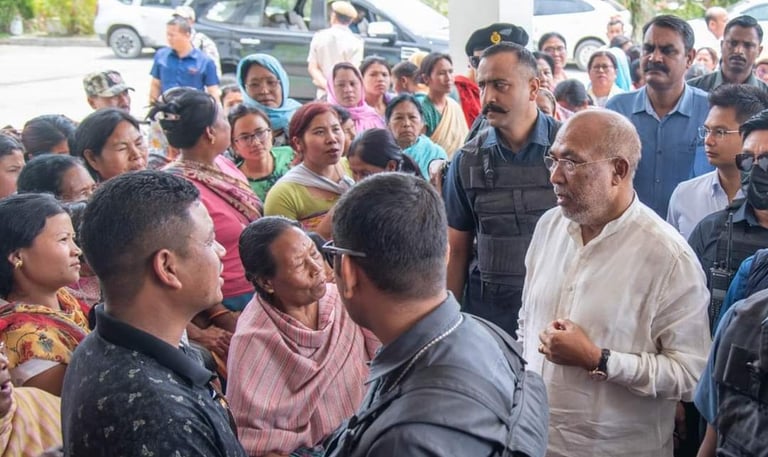
The reciprocal expectation—that six abducted Nagas, held by the Kukis, would similarly return safely—soon gave way to horror. The six missing Nagas were later discovered dead, with reports of severe mutilation, triggering shock and anger across Naga areas. For many Nagas, grief quickly transformed into resentment.
A particularly painful dimension of the crisis was the perception that political and civil pressure had successfully secured the release of the 14 Kukis, while the six Nagas never returned alive.
Political discussions in Manipur soon gave rise to difficult and unresolved questions over what authorities knew, when they knew it, and whether negotiations unfolded amid fears about the likely fate of the missing Nagas.
These remain deeply contested and unverified concerns. Yet in conflict zones, unanswered questions carry immense political force.
Anger among sections of the Naga public increasingly turned toward the United Naga Council (UNC), with frustrations emerging over whether stronger pressure should have been exerted earlier. The emotional weight of discovering the six men dead—particularly amid reports of mutilation—deepened a sense of collective grievance.
One painful hypothetical now circulates quietly in political discussions: What might have happened had the bodies of the six Nagas been discovered before the release of the 14 Kukis?
Many fear the consequences could have been catastrophic.
The Nemcha Kipgen Factor and Political Messaging
Deputy Chief Minister Nemcha Kipgen’s role during the hostage episode has also become part of wider political discussion. Her reported involvement in securing the release of the 14 Kukis reinforced perceptions among many that Kuki political leaders possess stronger channels of influence with central authorities than leaders from other communities.
Critics point to the speed and intensity of political engagement as evidence of political leverage.Supporters, however, argue that such intervention simply reflected urgent humanitarian necessity and political responsibility.
In polarised environments, the same political action is rarely viewed through the same lens. Complicating matters further are unverified allegations circulating in political and civil circles regarding the possible involvement of armed Kuki groups operating under the SoO arrangement in the kidnapping and killings of the six Nagas. Some of these allegations specifically mention the role of certain militant factions.
At present, these allegations remain unverified and should be treated with caution unless independently investigated or officially established. Nonetheless, their circulation reflects an atmosphere of deep mistrust.
When violence becomes ethnically framed, rumour and grievance often begin shaping political reality.
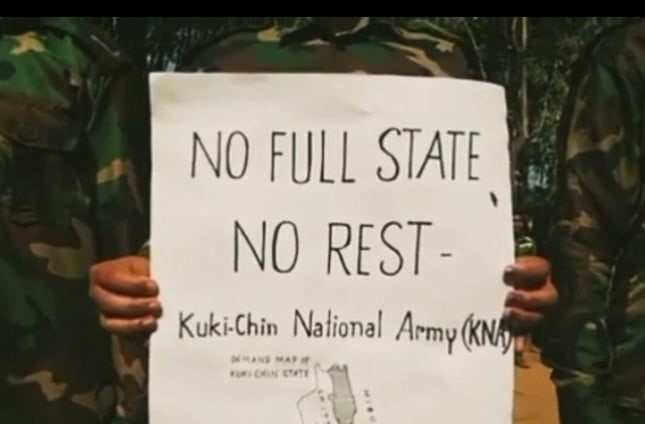
Earlier Episodes That Strengthened the Perception
The hostage episode is not emerging in isolation. For many Meiteis, the perception of political favour toward the Kuki–Zo began taking shape much earlier.
Repeated high-level engagement between Kuki–Zo representatives and Union authorities, often contrasted against frustrations voiced by Meitei and Naga bodies, strengthened perceptions of unequal access to decision-making.
Equally contentious were allegations—frequently denied by authorities—that some central security forces displayed operational preferences on the ground. Among sections of both Meiteis and now increasingly Nagas, suspicions persist that security responses have not always appeared even-handed.
No conclusive evidence has publicly established institutional bias. Yet perceptions of selective enforcement have become politically powerful in shaping public sentiment.
This matters because in conflict zones legitimacy is everything. A state may insist neutrality, but if communities cease believing in that neutrality, the political damage is already done.
The Kuki–Zo Counter Argument
Kuki–Zo organisations strongly reject claims of political favouritism. From their perspective, access to Delhi is not privilege but necessity. Kuki civil bodies argue that their community faced existential threats during the violence and that engagement with the Centre became essential for survival. They also contend that accusations of preferential treatment overlook the destruction experienced by Kuki villages, displacement and civilian suffering.To many Kuki–Zo voices, what others interpret as political leverage is simply political visibility born from vulnerability.
This perspective cannot be ignored. For analytical balance, it is important to recognise that every side in Manipur sees itself as historically wronged.
The Larger Danger of Unequal Perception
Whether the perception of Kuki–Zo political advantage is entirely accurate may ultimately matter less than the fact that it is increasingly believed. And this belief is spreading. First among sections of Meiteis, now increasingly among Nagas, a common frustration appears to be emerging: that access to power in Delhi feels unequal. This is dangerous territory.
Peace processes depend fundamentally on trust in neutrality. If communities begin believing that political access determines justice, every future intervention risks being interpreted not as conflict resolution but as political favour.
The recent hostage crisis exposed this faultline starkly.
The release of 14 Kukis through political intervention, followed by the grim discovery of six dead Nagas, has left behind not merely grief but a deeply unsettling political message in the minds of many.
In deeply divided societies, power is measured not only in institutions or arms, but in access—the ability to command urgency from the state. In Manipur today, an increasingly uncomfortable perception is taking hold across communities: that political responsiveness itself may be uneven.
Whether justified or not, that belief risks becoming another faultline in a state already fractured by too many.
CONTACT
Waari Singbul Office
Konung Mamang
Imphal – 795001
© Copyright 2023 Waarisingbul.com. All Rights Reserved