
The War That Never Ended: Why Thokchom Borun’s Battlefield Could Become One of India’s Most Striking Anti-War Documentaries
ART & CULTURE
Imphal: “At the beginning, I was completely lost. I did not know how to approach the story,” — Borun Thokchom
As the curtains rise on the 19th Mumbai International Film Festival (MIFF) 2026 — South Asia’s oldest and largest festival dedicated to documentary, short fiction and animation films — a quiet film from Manipur is already drawing unusual curiosity.
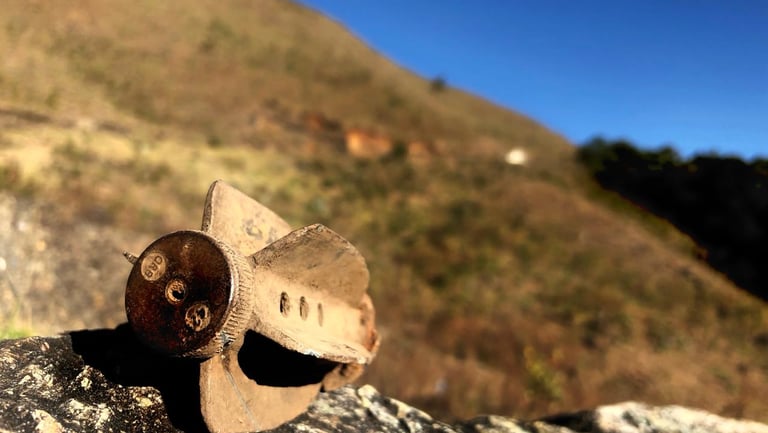
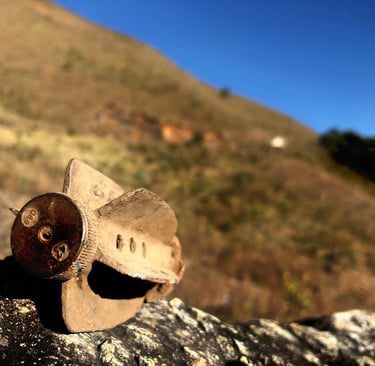
Image: A remnant of wartime ordnance rediscovered by the WWII Imphal Campaign Foundation, bearing silent testimony to the fierce battles of the Imphal Campaign and what still lies buried on the soil of Manipur.
Scheduled for screening on June 20 at 3:45 pm at Audi 1 of the FD-NFDC Complex in Mumbai, Battlefield, an 80-minute documentary by Manipuri filmmaker Borun Thokchom, enters the International Competition section of one of Asia’s most respected non-feature film festivals.
Established in 1990 and organised by the National Film Development Corporation (NFDC), Ministry of Information & Broadcasting, Government of India, MIFF has grown into a major global platform, carrying the distinction of a FIAPF-accredited A-grade festival. Its 19th edition, held from June 15–21, comes with the tagline: “Lighting up the silver screen with the world’s best documentary, short fiction and animation.”
In a competition that includes films produced globally between January 1, 2024 and December 31, 2025, Battlefield — a documentary that took nearly 13 years to complete — stands as one of the rare Indian films attempting to revisit the Second World War not through military triumph, but through memory, grief and unfinished human consequences.
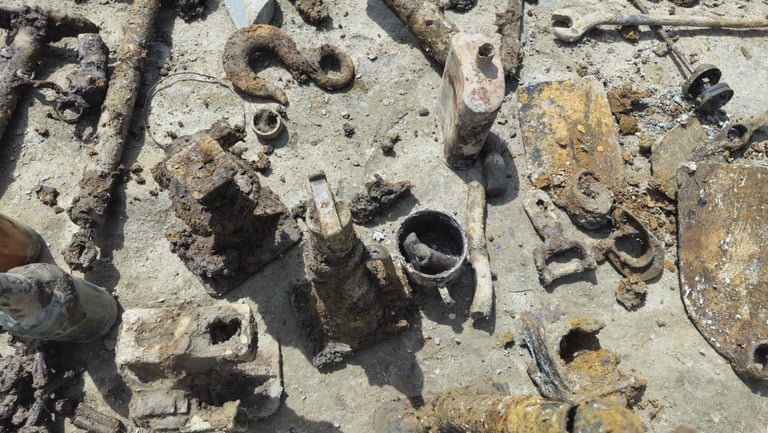
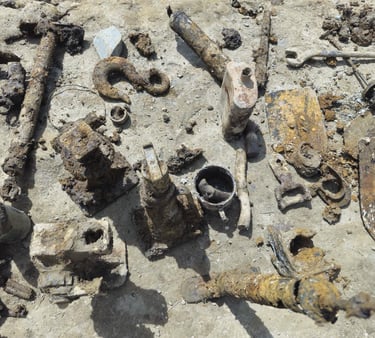
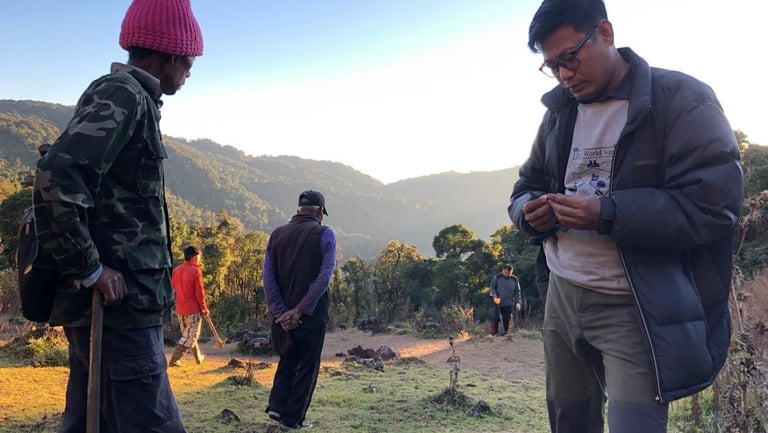
Image: WWII relics recovered during Rajeshwar Yumnam’s excavations
And therein lies its power.
For Battlefield may well emerge as one of the most striking anti-war documentaries to come out of India in recent years — not because it shouts against war, but because it quietly reveals how war never truly leaves.
There are wars that end with treaties, and there are wars that remain buried in the earth. Long after armies retreat and history books close, fragments endure — unexploded shells beneath village soil, rusted helmets buried in paddy fields, stories carried by grandparents who survived devastation. In Manipur, the Second World War is still remembered as Japan Lan — the “Japan War” — not as distant history, but as lived memory.
Borun’s Battlefield excavates precisely this forgotten terrain.
The film follows Rajeshwar Yumnam, an amateur war researcher from Imphal whose decades-long obsession with uncovering traces of the Battle of Imphal and Kohima gradually transforms into something deeper: an act of historical recovery and reconciliation. Through Rajeshwar’s efforts — digging trenches, recovering relics, tracing wartime remains and helping grieving descendants — the documentary opens an unusual window into a theatre of World War II the world rarely remembers.
The timing of Borun’s curiosity was uncanny.
In 2013, when the filmmaker first crossed paths with Rajeshwar, the National Army Museum in the United Kingdom had recently declared the Battle of Imphal and Kohima the fiercest and greatest land battle fought by the British Army — ranking it above even Waterloo and D-Day. Yet despite its significance in altering the course of the Second World War, Manipur remained marginal in global memory.
For Borun, then a television journalist based in Imphal, the discovery felt personal. Each excavation reminded him of stories he had grown up hearing from elders about wartime fear, displacement and survival.
“The world knows World War II, but it does not know what the war meant to Manipur,” Borun says. Yet finding the story was far from easy. In an exclusive interaction, Borun admits that the making of Battlefield began in uncertainty.
“At the beginning, I was completely lost. I did not know how to approach the story. There was material, there were stories, but I couldn’t find the film,” he recalls. At one point, Borun believed the documentary would centre on a British son seeking the remains of his father killed in the Battle of Imphal. That narrative collapsed. Another attempt — exploring indigenous wartime songs under a possible title, Songs of War — also failed.
For years, the project drifted. The turning point came unexpectedly through Imphal-Documentor, a documentary project development and mentorship programme organised by the Manipur State Film Development Society (MSFDS) in collaboration with Documentary Resource Initiative, Kolkata.
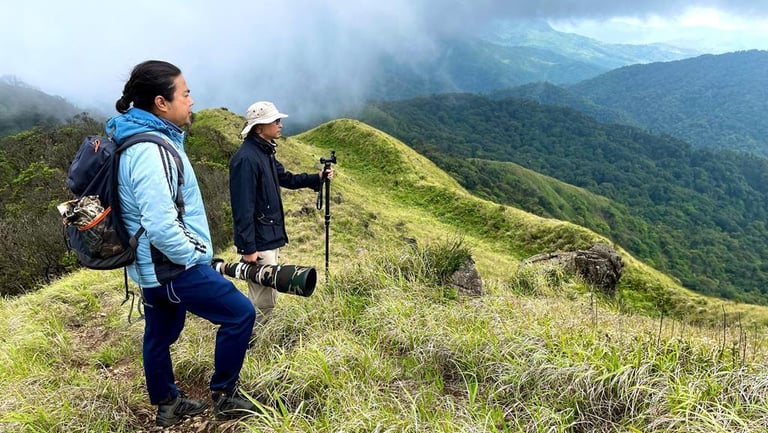
Image: Borun Thokchom during the shooting of his Battlefield
Image: Rajeshwar Yumnam on extreme right during one of his excavations in the hills of Manipur
There, Borun found clarity. He realised the story was not elsewhere. It was already before him. He only had to follow Rajeshwar.
Through Rajeshwar’s tireless pursuit of wartime memory, Battlefield slowly found its emotional core. Japanese and British families searching for closure over missing relatives began converging through his work. Former enemies, separated by history, increasingly found common ground in grief rather than nationalism. This is where Battlefield becomes remarkable. Unlike conventional war documentaries, Borun’s film refuses spectacle. It neither romanticises the Japanese advance nor celebrates Allied victory. Instead, it dismantles war quietly — through memory, loss and the persistence of suffering.
More devastatingly, Borun insists that war has not entirely ended. Unexploded ordnance still surfaces in villages across Manipur. Accidental deaths continue to occur. The land itself remains wounded. The violence, Battlefield suggests, is geological — embedded beneath the soil. This is what gives the documentary unusual global relevance. At a time when wars continue to unfold across continents, Borun’s film asks audiences to look beyond military victory and reckon instead with aftermath. Beneath every battlefield, it reminds us, lies grief.
Borun’s achievement is also a lesson in patience. Few documentary filmmakers sustain a project for over a decade, repeatedly abandoning false starts while waiting for a story to reveal itself. Yet perhaps this humility before subject is what gives Battlefield its emotional depth. Its emergence also quietly underlines the importance of mentorship ecosystems in regional cinema. That Battlefield eventually found form through MSFDS’ Imphal-Documentor is instructive. Other notable works, including Meena Longjam’s critically acclaimed Andro Dreams, similarly emerged through the initiative, while the MSFDS Screenwriter’s Project Development and Mentorship Lab continues nurturing fiction projects finding space in international co-production circuits.
Significantly, Manipuri cinema is marking a strong presence at MIFF 2026. Alongside Battlefield in the International Competition, Trishul Yumnam and Yaso Sharma’s 15-minute animation Story of a Forest is competing in the National Animation category among 12 films, while Dingko Thingnam’s short fiction project Eche has been selected for the second edition of the WAVES Doc Bazaar, held alongside the festival.
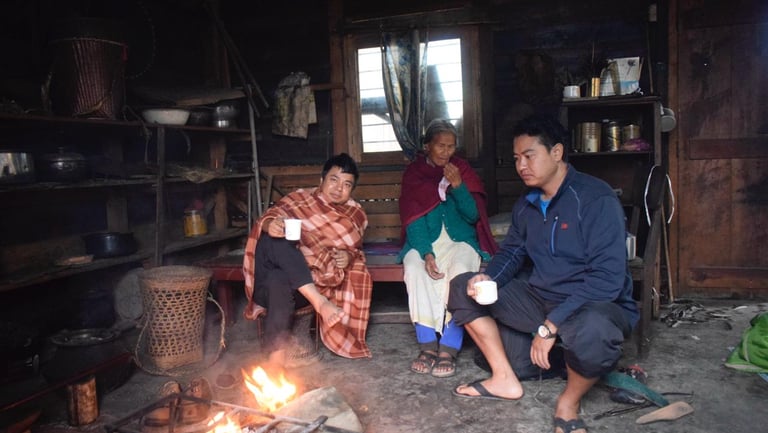
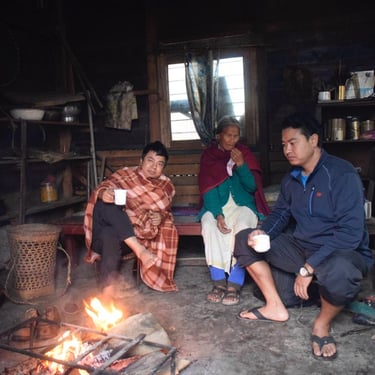
Image: Borun Thokchom spent time in the home of one of the survivors of the Battle of Imphal of the WWII
For a cinema ecosystem often battling infrastructural and financial constraints, the moment feels quietly significant.
As Battlefield screens before an international audience on June 20, Borun’s film carries more than a forgotten story of war. It carries a reminder that history does not disappear simply because nations stop fighting. Sometimes, it waits beneath the ground. And sometimes, a filmmaker patient enough to listen brings it back to light.
CONTACT
Waari Singbul Office
Konung Mamang
Imphal – 795001
© Copyright 2023 Waarisingbul.com. All Rights Reserved